Most fitness classes in Omaha cap at 20 people. We cap ours at 4.
That's not a marketing claim. It's a structural commitment — one that shapes everything from how sessions are paced to what results are possible. The cap isn't incidental to the method. It is the method.
Here's what the number actually means.
The Trainer Ratio Problem
There's a number above which constant supervision becomes physically impossible.
Four is below it. Twenty is not.
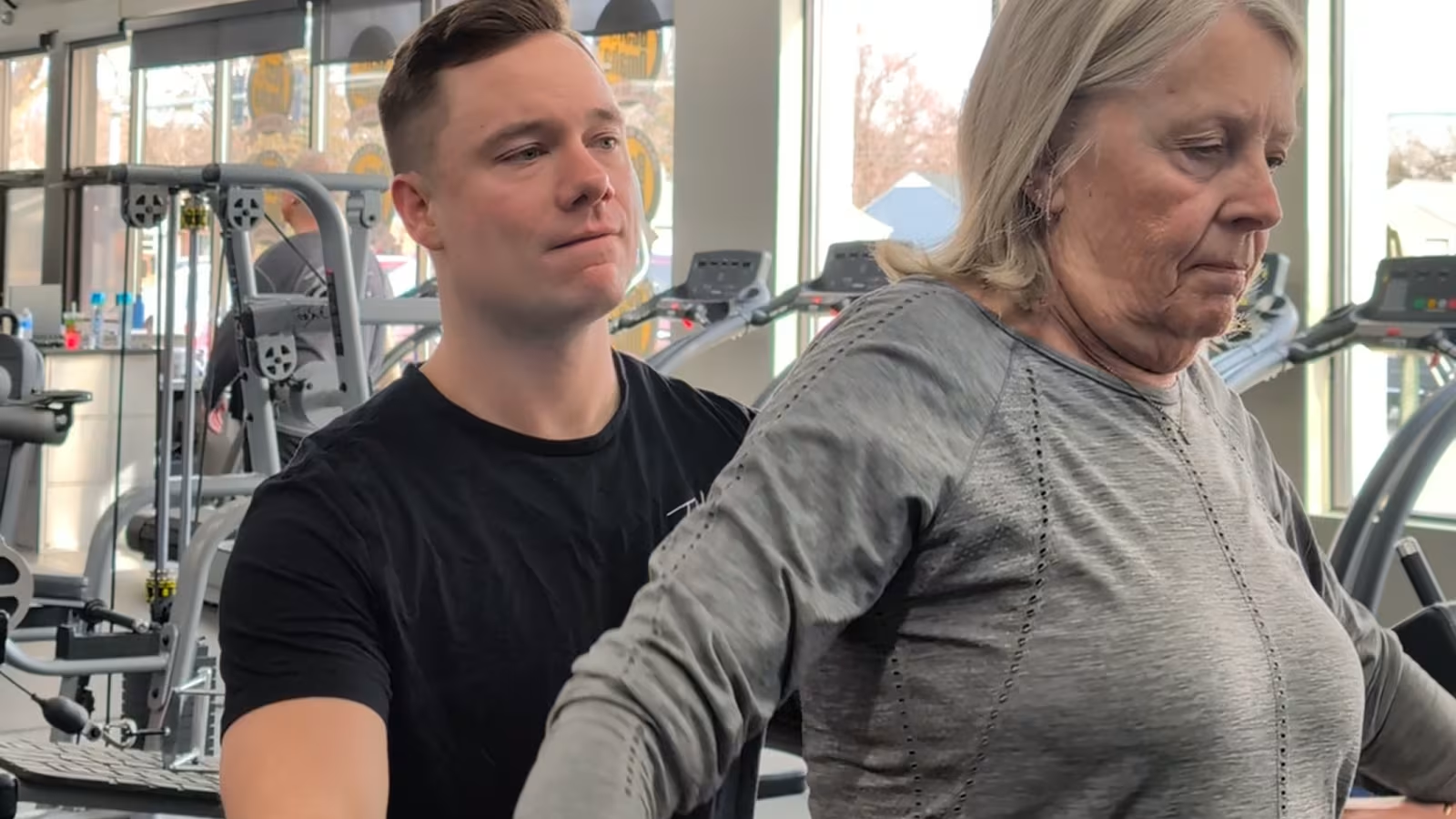
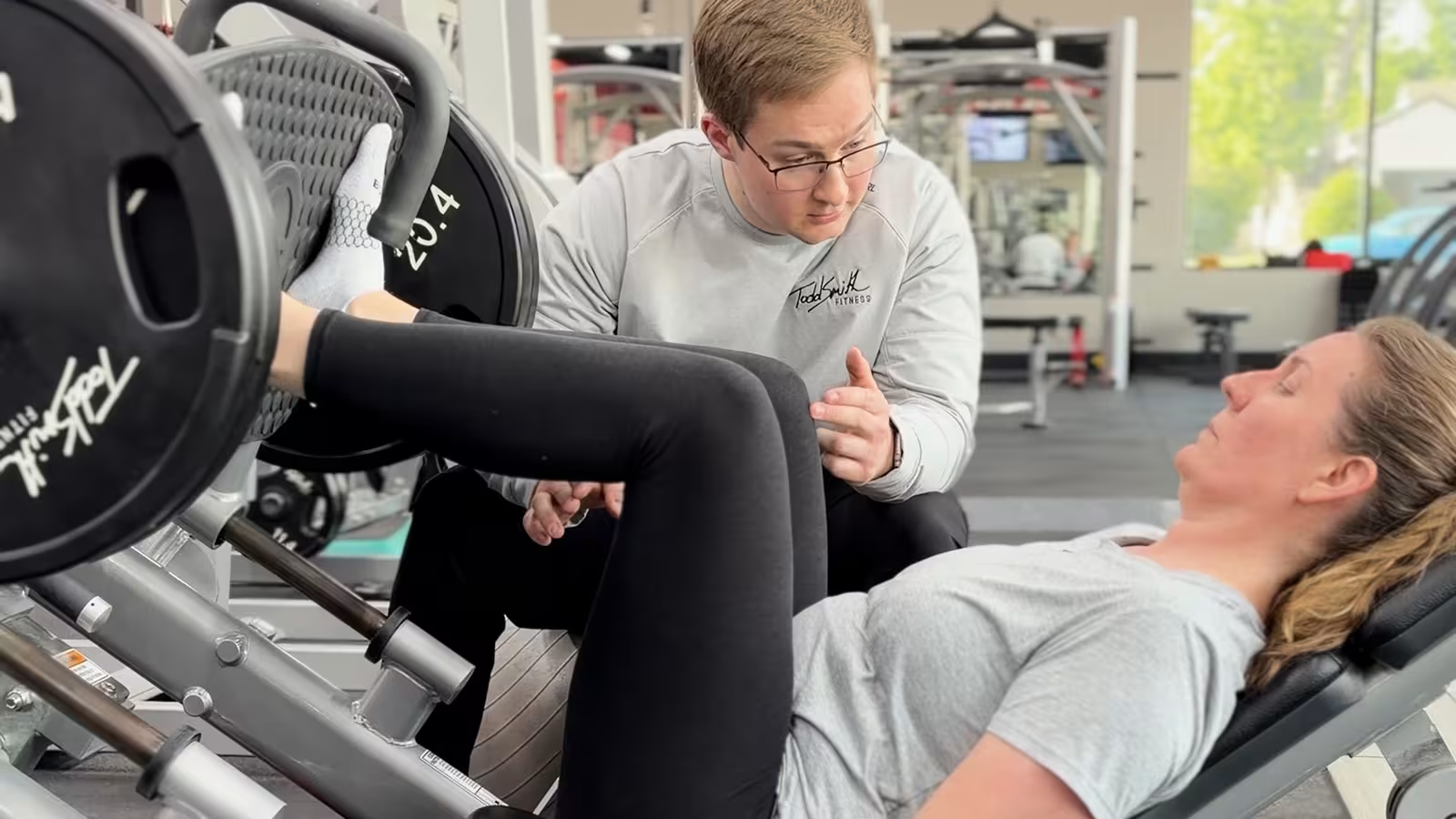
With four people and one trainer, you can watch every person in the room during every set. You know what each member did last session. You know which of them is having an off week. You can correct a knee drift on rep three — not at the end of the set when the damage is done, not at the end of the session, not in a follow-up email. On rep three.
At twenty people, you're watching the average. You're scanning the room. You might catch a problem. You might not. The training still happens — but the supervision disappears, and supervision is what turns a session into actual coaching.
The ratio of four to one isn't arbitrary. It's the number at which real-time correction stays possible for every person in the room. What constant supervision means in practice is the clearest argument for why.
The Rest Cycle
Strength training isn't continuous effort. It's intervals — load, recover, load again. The rest between sets is part of the work. It's when the nervous system resets, when the cardiovascular system clears, when the next set becomes productive instead of just possible.
At TSF, the micro-group structure is built around a working rest cycle. While one member is under load, the other three are recovering. The session stays in rhythm. Nobody sits around waiting for equipment. Nobody rushes a rest to keep pace with a packed class.
With twenty people and one trainer, that synchronization breaks down completely. The trainer is managing a flow problem instead of a coaching problem. Recovery windows become inconsistent. People either wait too long or return to work too quickly, and neither serves the training stimulus.
Four people means the rotation works. The rest cycle is part of the program design, not an accident of the schedule.
Every Rep, Every Set
Form doesn't fail at the start of a set. It fails when the muscles fatigue — set three, set four, the last two reps of a working set. That's when joint stress climbs, when the body starts recruiting the wrong muscles to finish the movement, when injury risk concentrates.
A trainer who's watching the average won't catch form breakdown at the hard part of the set. A trainer watching four people will.
At TSF, three hours a week is the dose — not because three hours is convenient, but because three hours of fully supervised, fully corrected training delivers more than five hours of uncorrected volume. Every set across the full session is watched. If something needs to be adjusted, it gets adjusted during the set, not after.
The cap at four is what makes that possible.
This Isn't Small Group. It's a Different Category.
"Small group training" usually means a smaller class. Ten people instead of twenty. Eight instead of fifteen. The format is the same — a trainer at the front of the room, members following cues, supervision distributed too thinly to be real.
TSF's micro-group isn't a smaller version of a class. The cap at four changes the format entirely. The trainer isn't leading — they're coaching. Every member is known. Every session is calibrated to the person, not broadcast to the room. The ratio enables a level of individual attention that's structurally impossible at any number above it.
That's why we call it micro-group, not small group. The word matters. A group of four with one coach, full attention, synchronized rest, every rep watched — that's a different thing. If you're weighing micro-group against one-on-one, here's how the two formats compare
If you want to see what training in a cap-of-four looks like in practice, see how TSF membership works — or talk to a coach to find out whether micro-group is the right fit for your body.