Adding weight to the bar and building muscle aren't the same thing.
Most people think progressive overload means one thing: put more weight on the bar next session. And sometimes it does mean that. But if that's the only tool you're using — especially past 40 — you're leaving most of the mechanism on the table, and probably accumulating joint wear you don't need.
Progressive overload in weight training is about creating more tension on the target muscle over time. The weight is just one way to do that. It's not even always the best way.
What Progressive Overload Actually Means
Progressive overload is the principle that the body adapts to the demands placed on it. Apply a stimulus, recover, adapt, apply a slightly greater stimulus. That's how strength and muscle are built over time.
The key word is tension — specifically, mechanical tension on the muscle fibers. The body responds to how much tension the muscle experiences, not to the number printed on the dumbbell.
That distinction matters because the two can come apart. Going heavier doesn't always mean more tension on the target muscle. In fact, chasing heavier loads without the technique to support them often means less tension on the muscle you're trying to train, and more load distributed across joints, tendons, and compensating muscle groups that weren't the point.
Progressive overload strength training is about making the muscle work harder. Sometimes that's a heavier weight. Often it's something else entirely.
Why Heavier Doesn't Always Mean More Tension
Here's a concrete example: the lateral raise.
Going from a 30-pound dumbbell to a 35-pound dumbbell is a 16% jump in load. For most adults, that's too much for the shoulder to absorb cleanly. What actually happens: the range shortens, momentum creeps in, the traps take over, and the lateral deltoid — which is the whole point of the exercise — gets less tension than it did at 30 pounds. The number went up. The training stimulus went down.
Compare that to adding 5 pounds to a 200-pound press. That's a 2.5% increase. The body can absorb that without the technique falling apart.
The math tells you something important: on isolation movements that target smaller muscles, load jumps are proportionally enormous, and they almost always compromise the execution that creates the tension in the first place. Chasing the heavier dumbbell on a lateral raise usually buys you worse technique, not more muscle.
Weight is a proxy for tension. Tension is what matters.
The Question to Ask Before You Add Load
Before adding weight to any exercise, there's a more useful question: can you actually perform this well?
Not just complete it — perform it. Can you control the movement through a full range? Can you feel the target muscle working? Can you stabilize through the whole rep, recover fully, and do it again next week, and the week after, and for the next 20 years?
That last question is the one that changes the calculus for adults training past 40. The risk vs. benefit of any exercise looks different when the goal is to still be training in a decade. An exercise you can barely survive isn't building the foundation you want — it's borrowing against it.
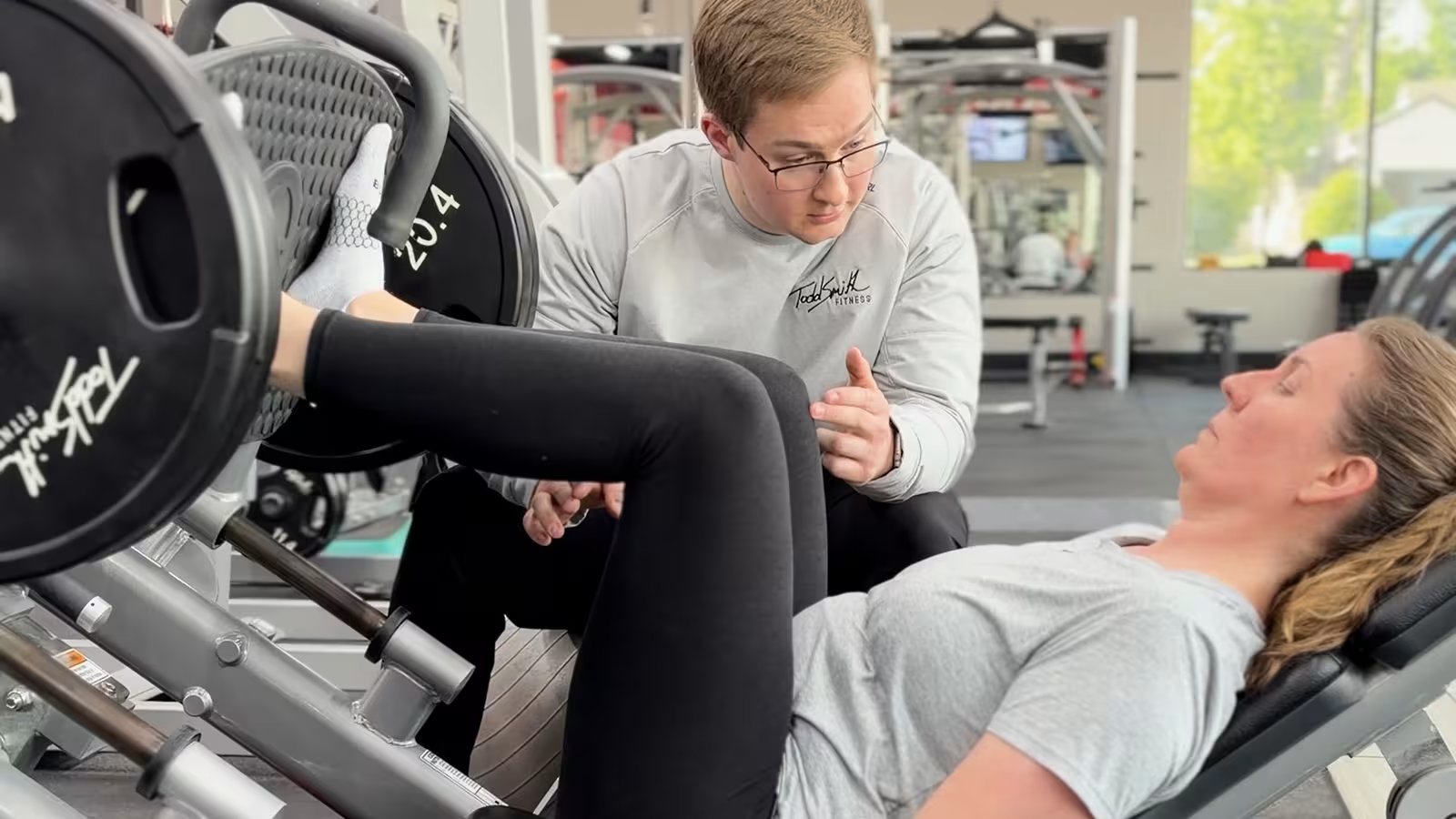
Take an older client doing a standing dumbbell press. On paper, a standing press is "harder" than a seated one. But if she can't brace her core, stabilize her shoulder, and hold her balance cleanly, she's not training her shoulder — she's surviving the rep. A seated version might let her actually train the target muscle: create real tension, fatigue it safely, and leave the session feeling good rather than just finished.
Complexity is not progression. Mastery is. The best exercise isn't the one that looks impressive — it's the one you can do well, recover from, and repeat for the next 20 years.
5 Ways to Do Progressive Overload Without Adding Weight
Once you've locked in execution, there are multiple ways to make a movement harder that don't involve picking up a heavier dumbbell:
1. Slow the lowering phase. A 4-second eccentric — the lowering part of the rep — dramatically increases time under tension and is where much of the muscle-building stimulus lives. It's harder than it sounds, and it doesn't require a heavier weight.
2. Pause at the hardest point. Killing the momentum at the bottom of a rep — where the muscle is most loaded and most stretched — forces it to actually do the work rather than coast through the range. A paused rep at the same weight is a genuinely harder rep.
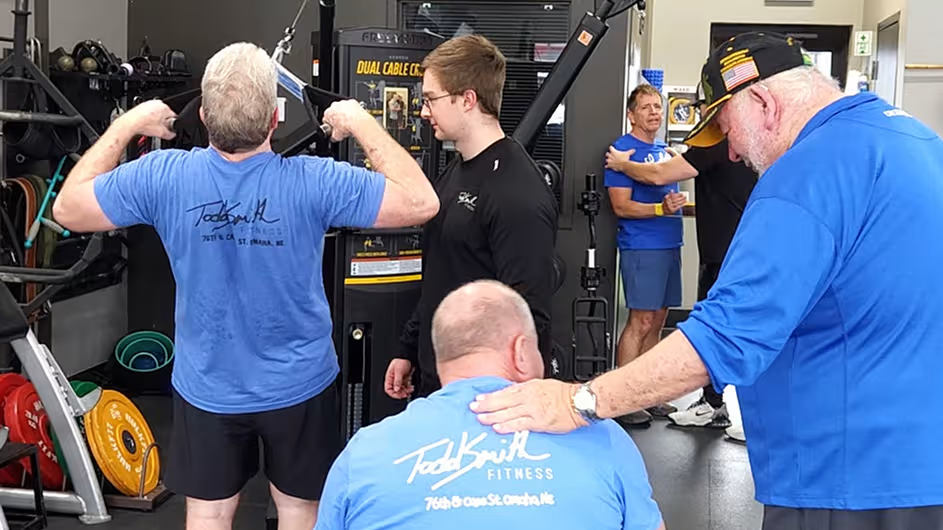
3. Improve your control and stability. A movement performed with full control and no wobble is recruiting more muscle than the same movement performed sloppily. "Getting tighter" is a real form of progression, especially when every rep is supervised and corrected in real time.
4. Add reps before you add pounds. If the program calls for 3 sets of 10 and you can get 12 clean reps, that's progression. Earn the weight increase by mastering the current load first.
5. Clean up your range of motion. A full, honest range of motion at the same weight is more work than a partial rep at a heavier weight. More range means more tension across more of the muscle's length.
These aren't workarounds. They're the actual tools of progression — and they're what three hours a week of supervised training can develop in ways that unsupervised volume simply can't.
Why This Matters More Past 40
For adults training past 40, chasing load as the primary measure of progression creates a predictable pattern: weights go up, form degrades, a joint starts complaining, training gets interrupted. The body has less tolerance for load increases that outpace technique. Connective tissue, which has a slower recovery cycle than muscle, accumulates the cost.
The goal — building muscle, staying strong, training in a body that holds up over time — is best served by progression that makes the muscle work harder without making the joints pay for it. That's not a limitation of training past 40. It's the smarter version of progression that most fitness culture never gets around to teaching.
Better reps. More tension. Mastery before load.
That's how you do progressive overload.
If you want to understand how progression is coached at TSF — what it looks like session to session, over months and years — talk to a coach. The discovery call is free and starts with your body, your history, and where you actually are right now.