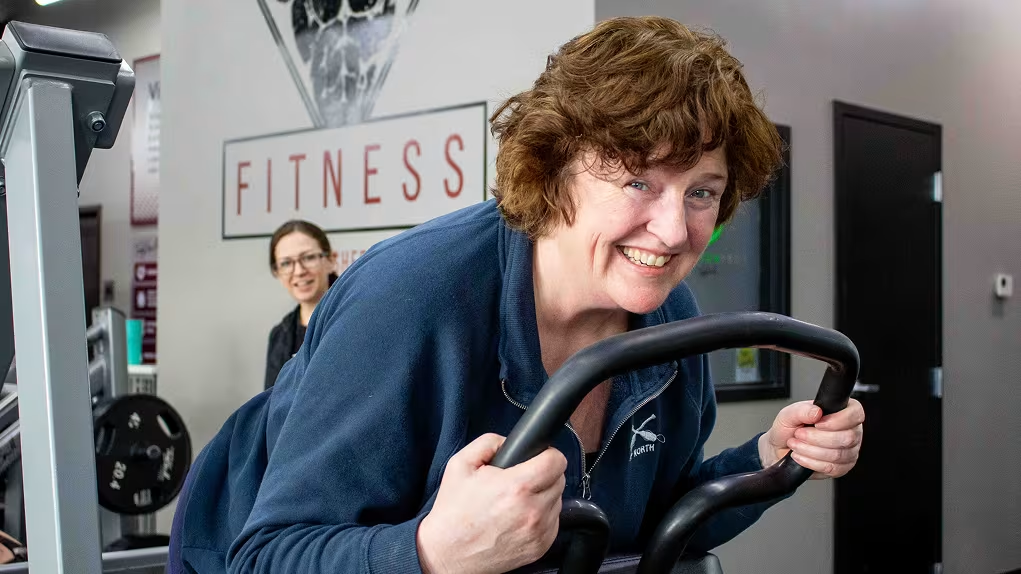
You can build muscle after 40. The biology supports it, the evidence is clear, and at Todd Smith Fitness in Omaha we have members doing exactly that — in their 50s, 60s, and beyond. What changes after 40 isn't the possibility. It's the conditions required for the possibility to become the outcome.
Most advice on building muscle after 40 either ignores those conditions entirely or treats age as a series of exceptions to work around. Neither approach is useful. The reason muscle matters so much after 40 is well-established — metabolic rate, structural integrity, long-term health. This piece is about the how: what specifically needs to be different about the training, the nutrition, and the environment for muscle to actually build.
What Changes After 40
Three things shift meaningfully after 40, and understanding them determines whether the training works.
Recovery takes longer. Connective tissue — tendons, ligaments, joint cartilage — accumulates load more slowly and repairs more slowly than it did at 25. This isn't a reason to train less hard. It's a reason to train more precisely and take the recovery window seriously. Muscle growth happens between sessions, not during them. Compressing that gap with excessive volume produces diminishing returns quickly.
The margin for poor execution narrows. A 24-year-old can execute a barbell movement with moderate form errors and recover without consequence. A 48-year-old with a shoulder that's been managed for two years cannot. At 40-plus, every rep needs to do what it's supposed to do — load the target muscle through the right range, without transferring cost to the joints. This isn't caution. It's efficiency.
Protein utilization changes. Research consistently shows that older adults need more dietary protein to produce the same muscle-building signal as younger adults — and that the timing and distribution across meals matters more. This is directly actionable.
The Training
The training variables that matter most for building muscle after 40:
Quality over volume. Three hours a week of precisely executed, supervised training outperforms five hours of self-directed work in most cases. Not because less is always better, but because the 40-plus body has less tolerance for accumulated imprecision. A rep that doesn't fully load the target muscle is a rep that didn't produce the adaptation you were there for.
Progressive overload — but applied correctly. Building muscle requires progressively increasing the demand on the muscle over time. But "more weight on the bar" is only one form of progression. Slower tempo, greater range of motion, improved muscle connection, more controlled eccentric — all of these increase the stimulus without adding joint cost. Progressive overload after 40 is a more nuanced calculation than it was at 25.
Exercise selection on a risk-vs-benefit basis. Every movement a 40-plus body performs should pass a simple test: does the training return to the target muscle justify the joint cost for this specific body? For many adults, standard gym staples fail this test — not because they're bad exercises, but because the cost isn't worth it given the history. A coach who knows the body makes this call correctly. A generic program can't.
Rest between sets matters more than you think. Rushing rest intervals to keep the session feeling intense is a younger person's habit. For adults building muscle after 40, adequate rest between sets allows the next set to be executed with the quality that produces adaptation. Fatigue-driven form breakdown is where the joint cost accumulates.
The Nutrition
Protein — more than you're probably eating, distributed across the day.
The target for adults building muscle after 40 is roughly 0.7–1 gram of protein per pound of bodyweight per day — toward the higher end for those training consistently. More importantly, that protein should be distributed across meals rather than backloaded at dinner. Breakfast with 25–40 grams of protein, a protein-anchored lunch, and a similar dinner creates the sustained amino acid availability that muscle synthesis requires.
The most common pattern we see: adults who eat well at dinner but run on coffee and light eating through the day. That's not a muscle-building environment for a 40-plus body. It's a stress environment.
Caloric context. Building muscle requires being in or near caloric maintenance — not a significant deficit. Adults who are simultaneously restricting heavily and expecting muscle gain are working against their biology. The muscle-first approach means fueling for muscle, and letting body composition shift as a result — which it does, when the training and protein are right.
The Environment
This is the variable most advice skips — and the one that matters most for sustained results.
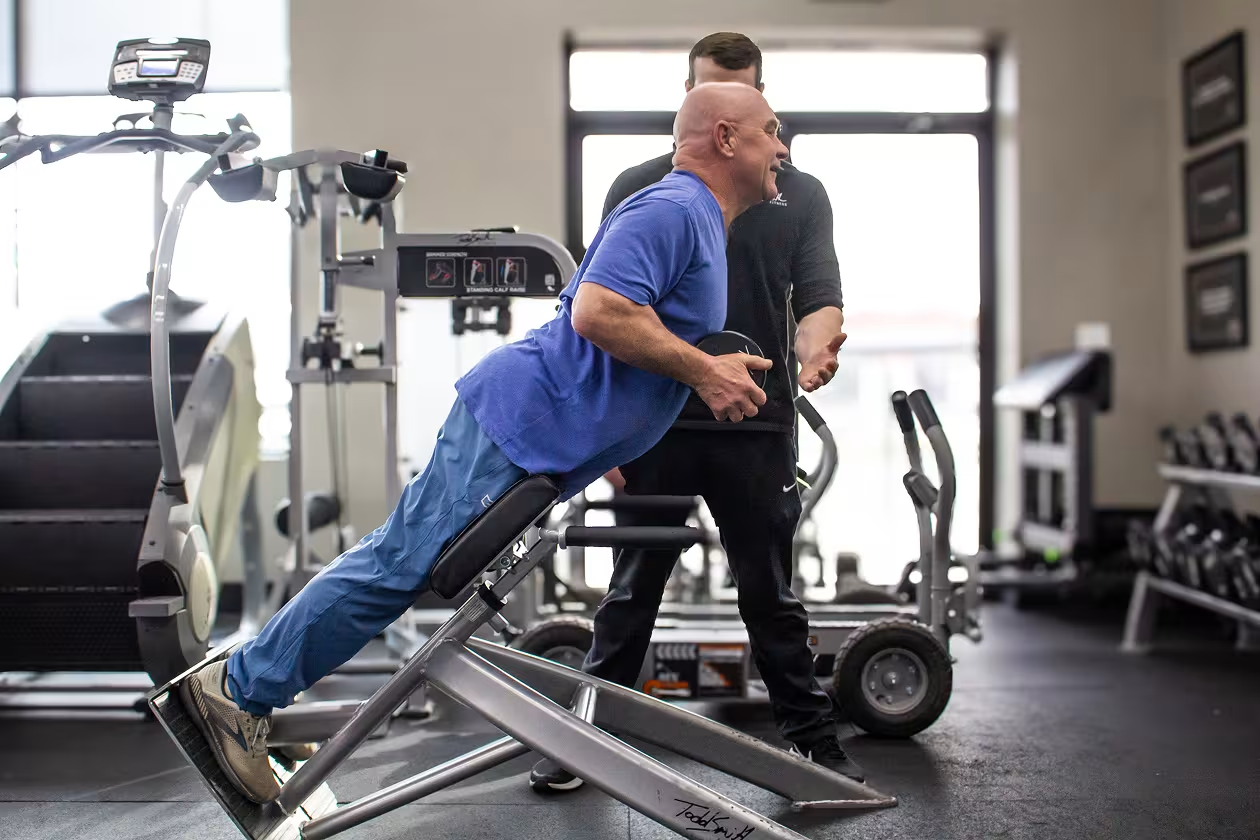
Building muscle after 40 isn't a six-week project. It's a multi-year process that requires consistent training with adequate supervision. The reason micro-group training at TSF produces the results it does for adults in their 40s, 50s, and 60s isn't the programming on paper — it's that every rep of every set is watched by a coach who knows the member's body well enough to catch what the member can't feel. A deviation that feels like normal exertion to the person experiencing it is visible to a trained eye. That's where the difference between training that builds and training that quietly costs gets made.
The members at TSF who have added meaningful muscle in their 50s didn't find a better program. They trained consistently, precisely, with someone paying attention — for years.
If you're in Omaha and want to understand what building muscle after 40 actually looks like for your body and your schedule, talk to a coach. The discovery call is free. It starts with where you are — not where a generic program assumes you are.