When we say "bodies with history," we're not talking about broken bodies.
We're talking about the 52-year-old whose left shoulder has been watched for three years after a rotator cuff repair. The 48-year-old who played competitive tennis into her late 30s and whose knees have been a factor in every training decision since. The 61-year-old who carried weight for most of his adult life, lost it, and now wants to build something that lasts — in a body that absorbed 20 years of excess load before the work began.
These aren't edge cases at TSF. They're the core population.
What History Actually Includes
History isn't just injuries, though it includes those. It's the accumulated record of everything a body has been through — and everything that record means for how it needs to train now.
It includes the sports that built certain movement patterns deeply and others not at all. The surgeries, the recoveries, the joints that healed imperfectly or were worked around for too long before anyone addressed them properly. The decades of sedentary work that changed posture and shortened ranges of motion in ways that don't reverse quickly. The diets that cost muscle. The training phases that built capacity in one area while quietly creating an imbalance somewhere else.
It also includes age itself — not as a ceiling, but as a biological reality. Connective tissue accumulates load more slowly at 50 than it did at 25. Recovery windows lengthen. The margin for poor exercise selection narrows. What a 28-year-old can train through without consequence is, for a 50-year-old with a hip that's had two procedures, a problem that compounds over time.
None of this means the body can't be trained hard. It means the body needs to be trained right.
Why History Changes the Training
Most fitness programming treats history as a list of modifications — things to avoid, exercises to substitute, movements to approach carefully. That's a start. It's not enough.
The deeper implication of history is that it changes the risk-benefit calculation for every single exercise. At TSF, every movement passes that test for the specific body in front of us: does the training return to the target muscle justify the joint cost for this person, at this stage, given what their body has been through? The answer changes person to person, and it changes over time within the same person.
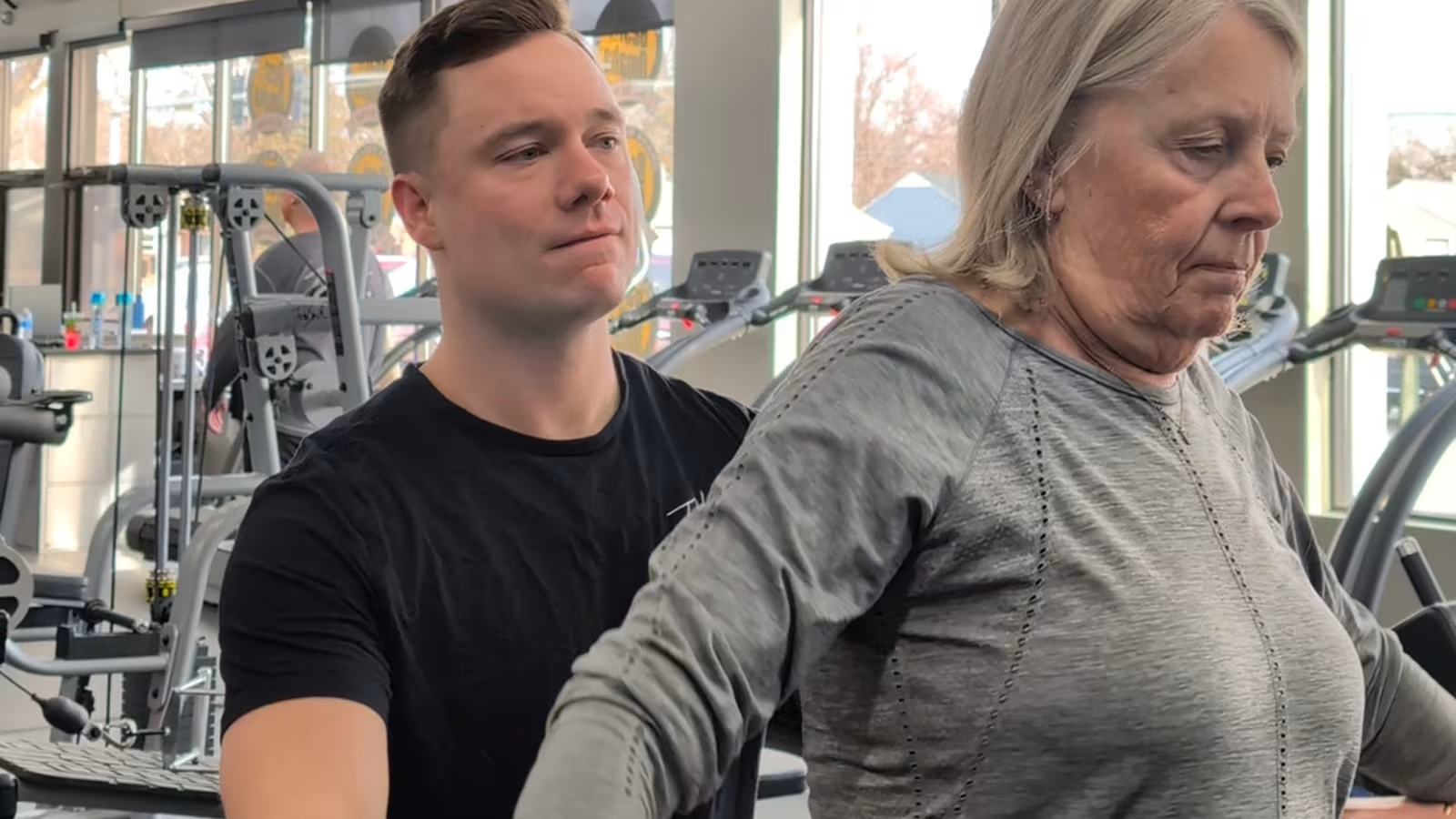
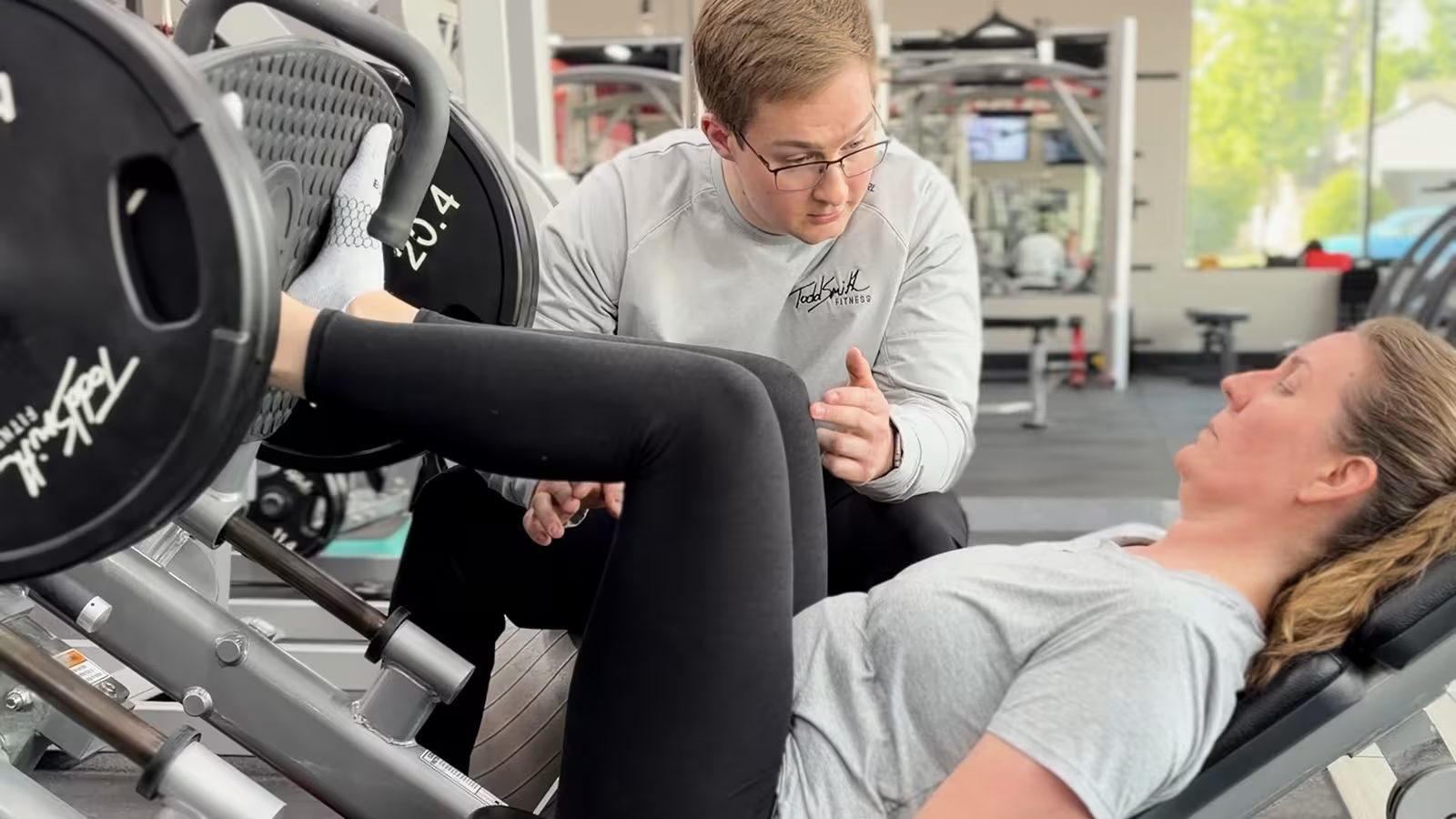
A barbell back squat loaded to maximum might be the right choice for one member and a structural liability for another — not because squatting is wrong, but because the cost-benefit math is different. What a body with history needs is a coach who can see that in real time, rep by rep, rather than a program written without knowing whose body will be executing it.
This is also why training volume looks different for this population. Three hours a week of precise, supervised work outperforms five hours of unsupervised training for most adults over 40 — not because less is always more, but because a body with history needs the gap between sessions to complete the adaptation. Compress that gap with volume the body can't absorb, and progress stalls. Or something gives.
What TSF Was Built For
Todd started TSF in 1984 because he watched fitness culture consistently ignore the people who needed it most — adults in their 40s and 50s with real schedules, real bodies, and real history. The methodology that came out of 42 years of that work wasn't written from theory. It was built from observation: watching what actually happened to real bodies when you trained them correctly over time, and what happened when you didn't.
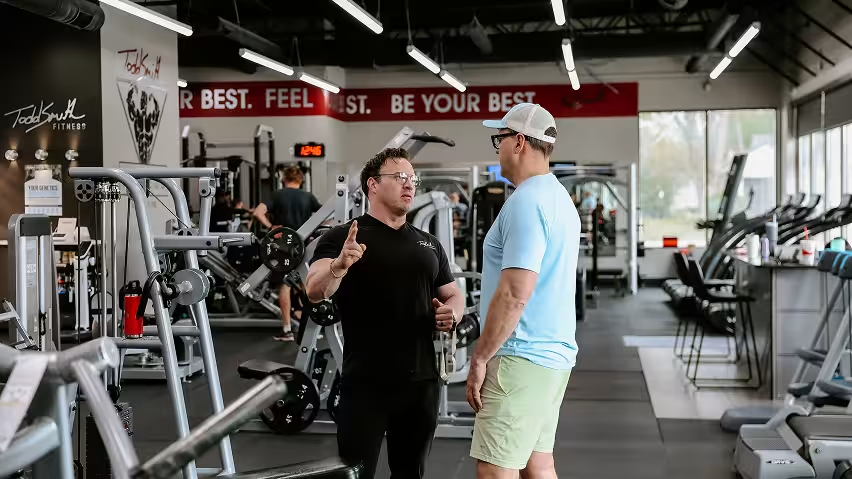
Micro-group training at TSF — a maximum of four members per coach — exists precisely because bodies with history can't be adequately served at scale. The coach-to-member ratio that makes genuine supervision possible is the same ratio that makes individualization possible. Three adults in the same session may be doing different exercises, different loads, different ranges of motion — calibrated to what each body needs, not averaged across the group.
A body with history isn't a harder client. It's a more interesting training problem. The goal is the same: build muscle, restore function, stay strong for the decades ahead. The path is specific to the person — not borrowed from a program that was written for someone else.
Who This Is For
If you've spent years being told what you can't do in a gym, TSF's approach is different. The question isn't what your history prevents. It's what your history tells us about how to train you correctly.
Every body that walks in here has a history. Some of it is written in old injuries. Some in movement patterns that developed over decades. Some in what the person has tried before and why it stopped working. A coach who understands how to read that history can build something that doesn't just work for now — but works for the next 20 years.
If you're in Omaha and want to talk through what training looks like for your specific history, talk to a coach. The discovery call is free. It starts with where you actually are.