For most of the last four decades, the fitness industry's answer to women over 40 was: more cardio, less food, lighter weights, more reps. Tone, don't bulk. Burn more than you eat. The scale is the measure.
That advice is wrong in almost every direction — and the shift away from it is one of the most important things happening in fitness right now. For women over 40 specifically, strength training isn't one option among many. It's the most effective tool available for the specific changes that happen to the female body in this decade — and the decades that follow.
Here's what those changes are, what strength training does about them, and what the right approach actually looks like.
What Changes After 40
After 40, women lose muscle mass at a faster rate than men if they're not actively working against it. The rate of that loss accelerates further without consistent resistance training. And because muscle mass is the primary driver of resting metabolic rate, the downstream effect isn't just aesthetic — it's metabolic. A body losing muscle year over year burns fewer calories at rest, manages blood sugar less efficiently, and has less structural support for the joints and skeleton that carry it through daily life.
Bone density is the other variable. Bone responds to mechanical load — specifically to the kind of progressive tension that strength training produces. Cardio doesn't do this in the same way. Walking, spinning, and group fitness classes don't create the loading stimulus that maintains and builds bone. Resistance training does.
The combination of these two realities — muscle loss and bone density decline — makes strength training the most direct intervention available to a woman in her 40s or 50s. Not a supplement to the real work. The real work.
What Strength Training Does That Cardio Doesn't
This isn't an argument against cardiovascular training — which serves important purposes for heart health and general conditioning. It's an argument against cardio as the primary tool for women who want to maintain body composition, strength, and structural health into their 60s and beyond.
Cardio burns calories during the session. Muscle burns calories around the clock. Building and preserving lean mass through strength training creates a metabolic environment that manages body composition over time — not through the work of restriction and expenditure, but through the sustained function of the tissue itself. This is what the TSF muscle-first approach means in practice: build the asset that works for you between sessions, not just during them.
The common fear — that lifting weights will make a woman look "bulky" — reflects a misunderstanding of both physiology and the kind of training that produces that result. The kind of programming that creates the lean, functional, structurally sound body most women over 40 are actually after is precisely progressive strength training. Not isolation machines. Not pink dumbbells. Compound movements, appropriate load, full range of motion, properly supervised.
What the Right Approach Looks Like
Frequency and volume. Two to three strength sessions per week is the effective range for women over 40. Three hours a week of well-coached training — not five hours of moderate effort — is enough to build muscle, maintain bone density, and improve metabolic function, provided the quality is there. Quality means the right muscles are doing the work, the range of motion is complete, and the load is challenging enough to create adaptation.
Progressive overload. Muscle builds in response to progressive demand. Each training block should challenge the body slightly more than the previous one — through additional load, slower tempo, greater range of motion, or increased complexity. Without this, training becomes maintenance at best and regression over time at worst. A coach tracks this systematically. A generic program doesn't.
Protein. Building and maintaining muscle after 40 requires adequate protein — consistently, at every meal, not just dinner. For women in this age range, aiming for 25–40 grams per meal gives the body the amino acid availability it needs to respond to training. This is where most women over 40 are under-fueled relative to what the training requires.
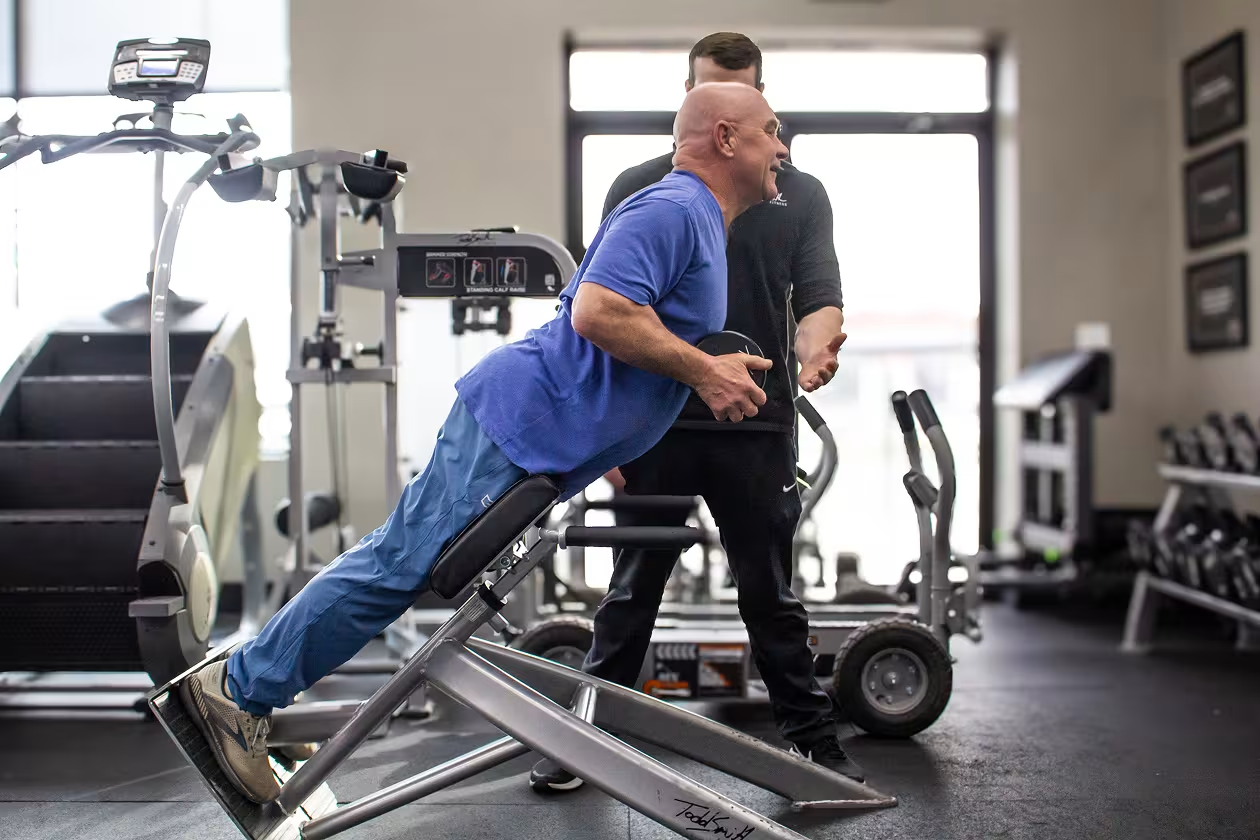
Supervision. This is the variable that separates training that produces results from training that produces injury risk. For women with joint history — a hip that's been managed, a knee that's had surgery, a shoulder with accumulated wear — the difference between an exercise that builds and one that costs is often invisible to the person doing it. A coach who knows your body catches it in real time.
What It Looks Like at TSF
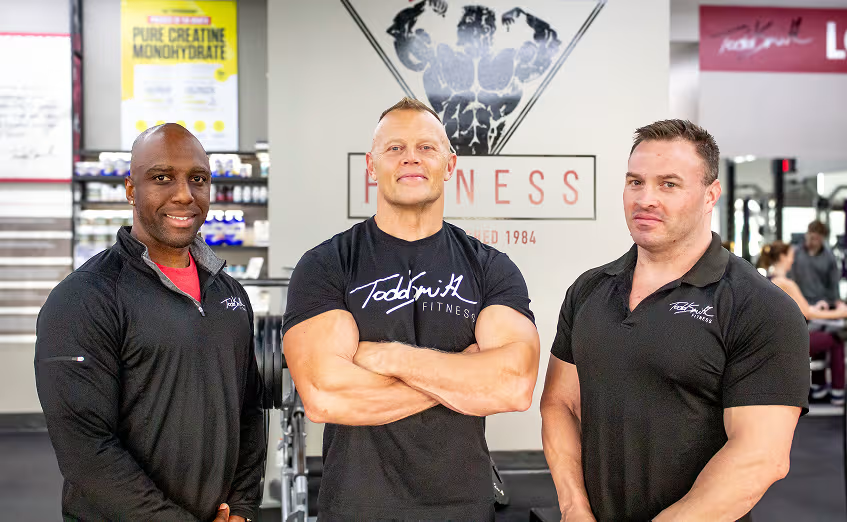
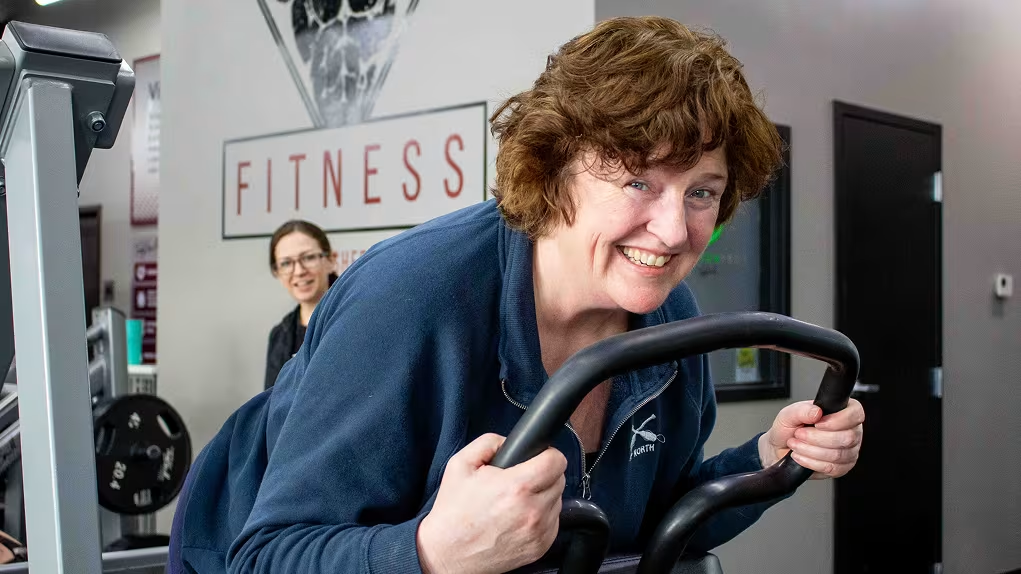
The women who train at Todd Smith Fitness in Omaha are in their 40s, 50s, and 60s. Physicians, executives, and business owners — with demanding schedules, real bodies, and long training horizons ahead of them. They don't train in group fitness classes. They train in micro-groups of four or fewer, with one coach watching every rep, in sessions built around their specific bodies and history.
The results are measured in what they can do, how their body feels, and whether they're measurably stronger and more capable year over year — not in a number on a scale. That's the right frame for women over 40 who want something that lasts.
If you're in Omaha and want to understand what a strength training program built for your body — your age, your history, your schedule — actually looks like, talk to a coach. The discovery call is free. It starts with where you are.