The honest answer: it depends on three things — your goals, your schedule, and how you train best.
At TSF, both formats are built on the same foundation. Every session is coached. Every rep is watched. The TSF methodology — muscle-first, recovery-driven, calibrated to your body — runs through both. The difference isn't supervision. The difference is structure.
Here's how to think through which one fits.
What Micro-Group Training Looks Like
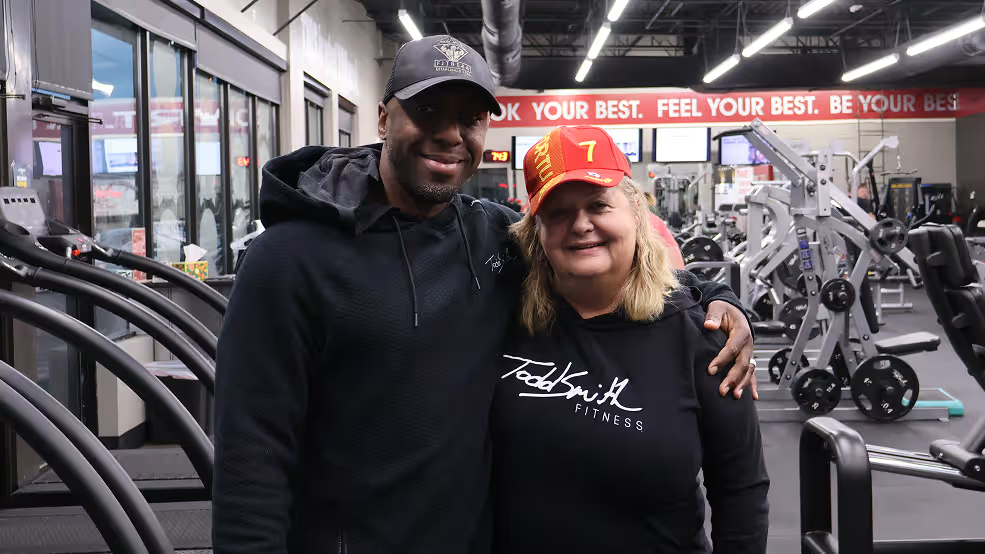
Micro-group training at TSF caps at four people. One coach, four members, in the same session — rotating through work and rest together.
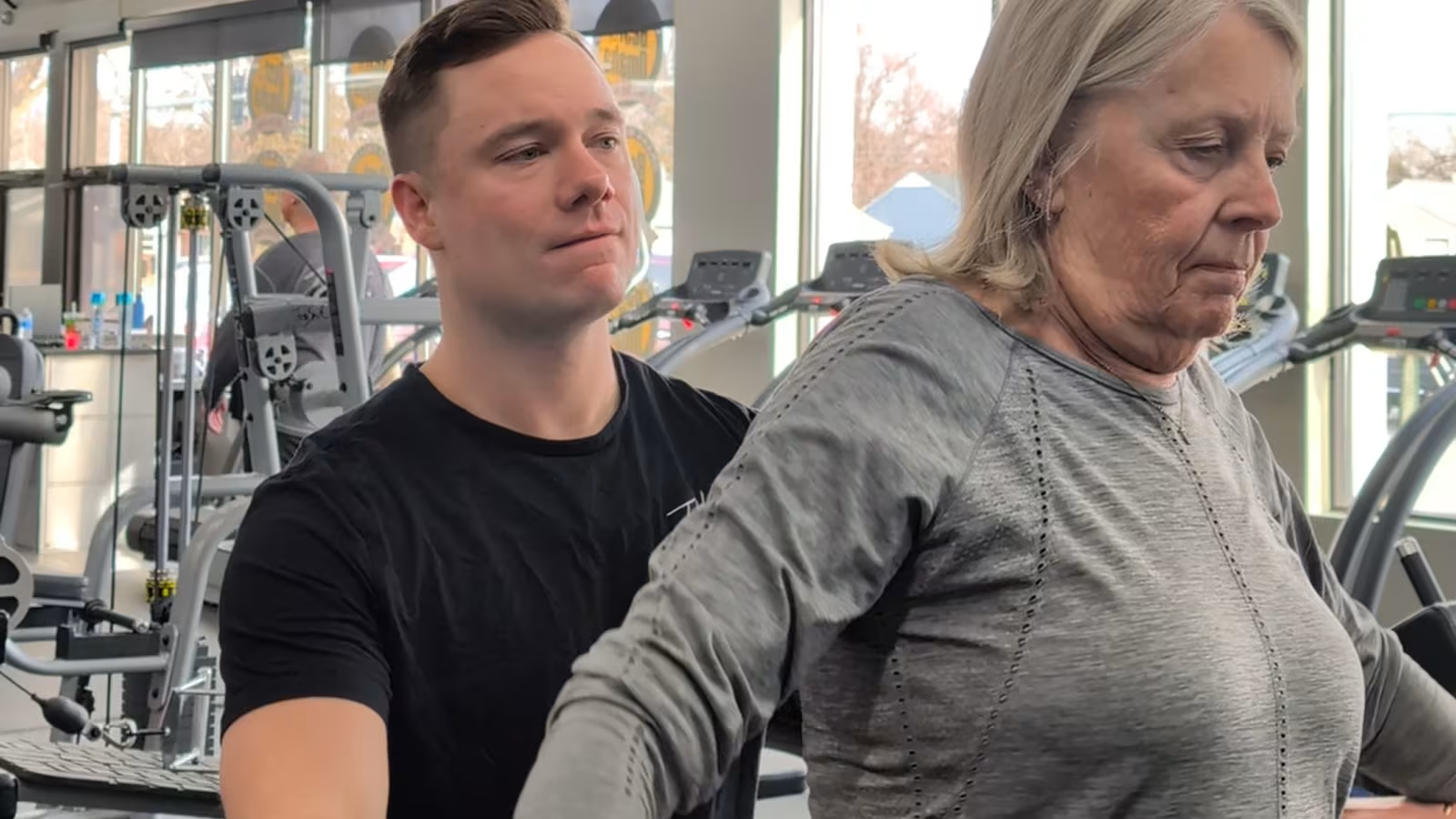
The cap at four is what makes it work. At that number, the trainer can watch every person during every set. Form correction happens mid-rep. Every member's history is known. The session stays personal even though you're not alone in the room.
The rest cycle is built into the structure. While one member works, the other three recover. That rhythm — load, rest, load — is part of the program design, not an accident of scheduling. The rest between sets is when adaptation begins; the micro-group format builds it in rather than leaving it to chance.
Most TSF members train in micro-group. It delivers constant supervision at a price point that's sustainable for the long term, with the added dimension of training alongside people at a similar stage of life. That social layer isn't the point — the coaching is the point — but it's real, and it keeps people consistent in a way solo training sometimes doesn't.
What Tailored One-on-One Training Looks Like
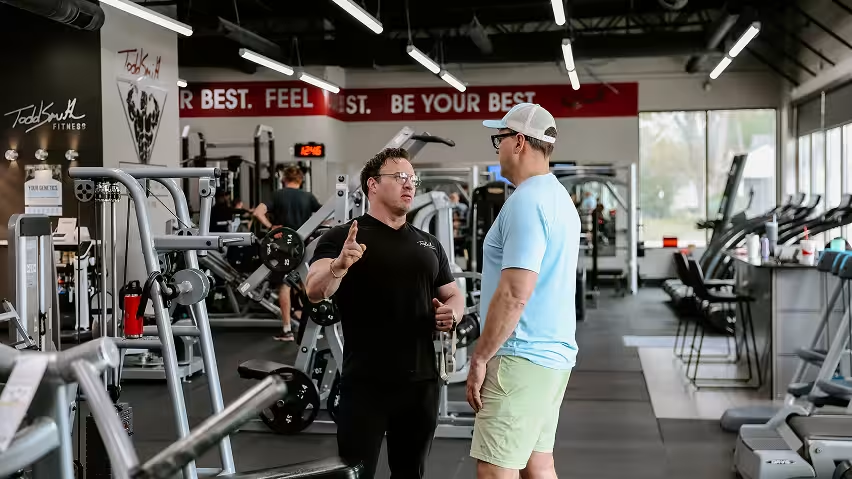
Tailored training is you and one coach, every session. No shared rest cycle, no shared schedule — the session is built entirely around you.
The supervision is the same. What changes is the flexibility. With one-on-one training, the session structure adapts in real time to how you're showing up that day, without the need to account for three other people's programs. If you're carrying a flare-up in your left hip that day, the entire hour pivots. If you're having an unusually strong week, you push into it immediately.
One-on-one also removes the scheduling constraint that a shared group creates. You're not locked to a rotation — your start time and session pacing are calibrated entirely to you.
The trade-off is cost. Full individual attention, no shared structure, maximum calendar flexibility — that comes at a premium over micro-group rates. For most adults, micro-group delivers everything they need. For some, the additional adaptability of tailored training is worth it.
Three Questions to Help You Decide
1. Do you have a specific rehabilitation context or complex injury history?
If your training requires real-time structural adjustment that's difficult to manage within a shared rotation — a recent surgery, an active injury you're working around, a condition that requires session-by-session modification at a high level of specificity — tailored one-on-one gives the trainer more room to adapt without navigating the group structure at the same time.
Micro-group handles a wide range of bodies with history well. Why we cap at four is precisely because the ratio keeps the supervision tight enough to manage individual needs. But the highest-complexity cases sometimes benefit from the additional flexibility of one-on-one.
2. How do you respond to training with others?
Some people train better alongside others. The structure of a group keeps them accountable — there's a session to show up for, a rotation to stay in, people who notice if you're not there. Others find the presence of others distracting, or prefer not to have any shared schedule pressure.
Neither preference is wrong. Micro-group works well for people who appreciate the rhythm of a structured session with others around them. Tailored training works well for people who want the session entirely on their own terms.
3. What does your budget support long-term?
Strength training compounds across years, not weeks. Three hours a week, done consistently for a decade, produces a body that's measurably stronger and more capable than one trained sporadically at higher intensity. The format you can sustain financially for five years will do more for you than the premium format you use for six months and then drop.
If micro-group fits your budget and tailored doesn't, micro-group is the right answer. The supervision quality is the same. The coaching is the same. The format that you can keep doing is the format that works.
The Decision TSF Members Usually Make
Most adults who train at TSF choose micro-group, and most of them stay in it for years. The supervision quality meets every need that comes up in a well-coached strength program. The social structure adds something real without compromising the individual attention. The price point makes it a long-term commitment rather than a short-term experiment.
Tailored one-on-one exists for the situations where individual structure is genuinely the right fit — not as an upgrade, but as a different format for different circumstances.
If you're not sure which applies to you, the discovery call is the right place to start. A coach will ask about your history, your goals, and what's worked or hasn't before — and give you an honest answer about which format makes the most sense for your situation.
Talk to a coach to figure out which format fits your body and your goals — the discovery call is free and there's no pressure to commit. If you're leaning toward micro-group and want to understand the membership structure, see how TSF membership works.