There's a difference between having a trainer nearby and being coached. The difference is constant supervision.
In most training environments, a trainer is present during your session. They're in the room. They hand you the weight, they demonstrate the movement, and they're available if you have a question. That's proximity, not supervision. It's not the same thing.
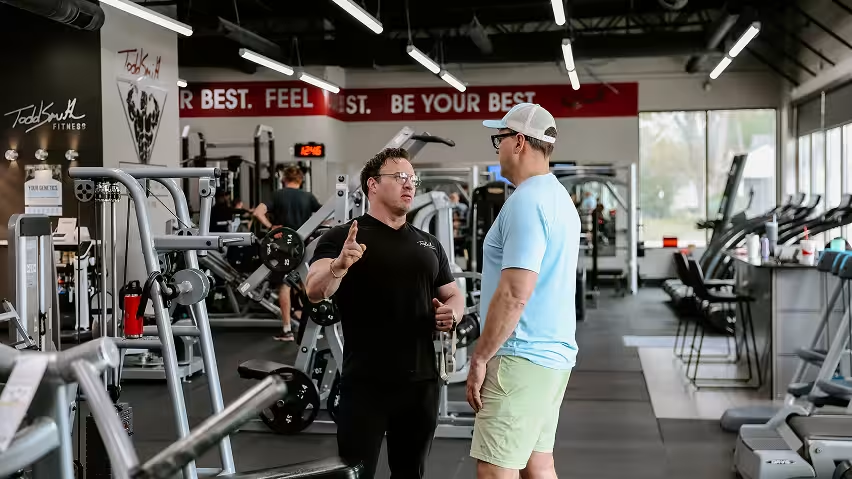
At TSF, constant supervision means something specific: every rep, every set, every session — a coach with eyes on you for the full duration of the work. Not stationed at a desk, not managing multiple people on different machines, not checking their phone between sets. Watching. The whole time.
That specificity is what makes it worth saying out loud.
What Constant Supervision Actually Looks Like
It starts before the set.
Before you lift, your trainer knows what you did last session. They know which side your hip drifts on during a Romanian deadlift. They know your left shoulder needs more warm-up than your right. They know you had a long week and that today's load should be adjusted accordingly. That context doesn't accumulate in a training app — it accumulates across dozens of sessions where someone was paying close attention.
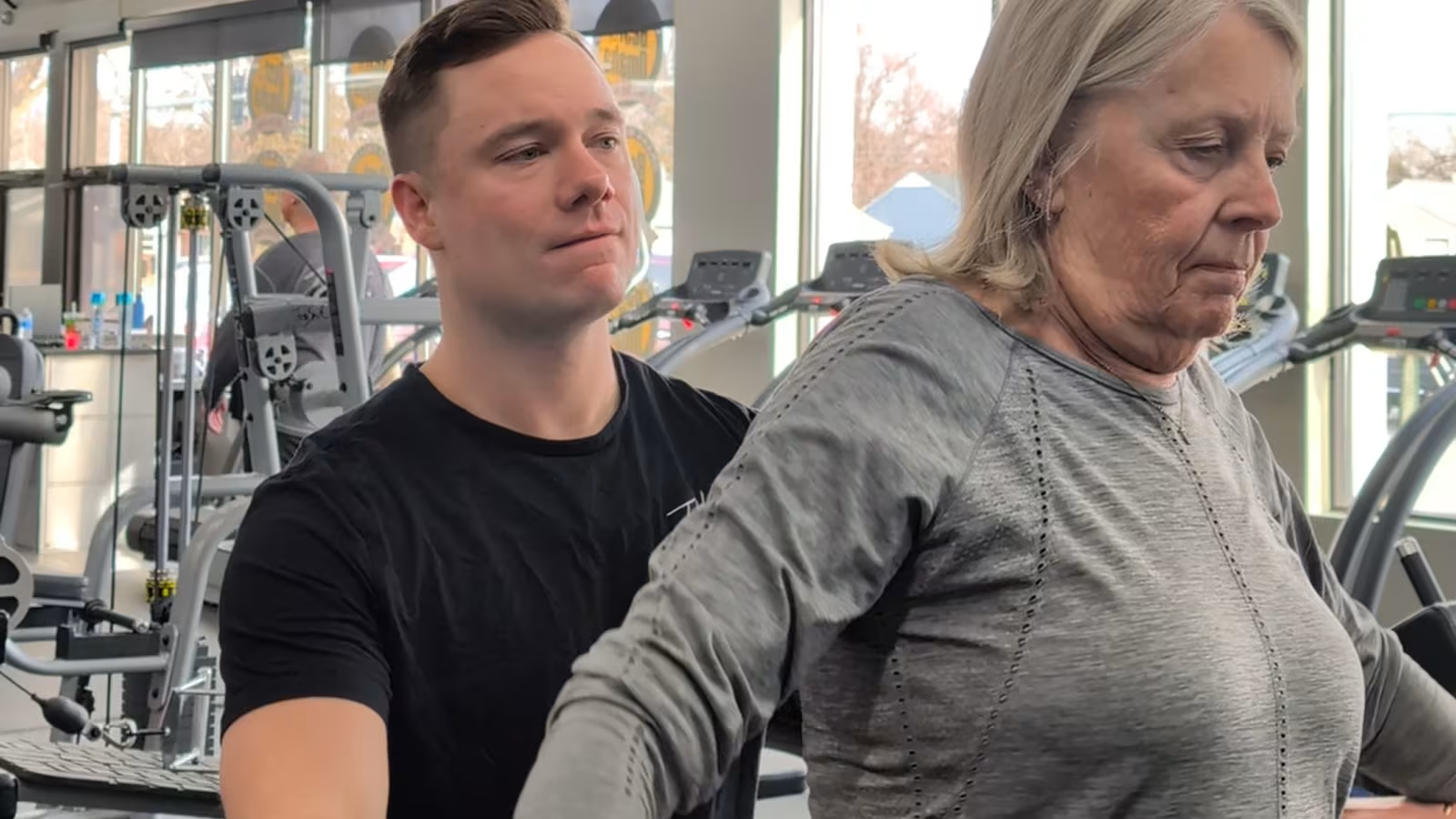
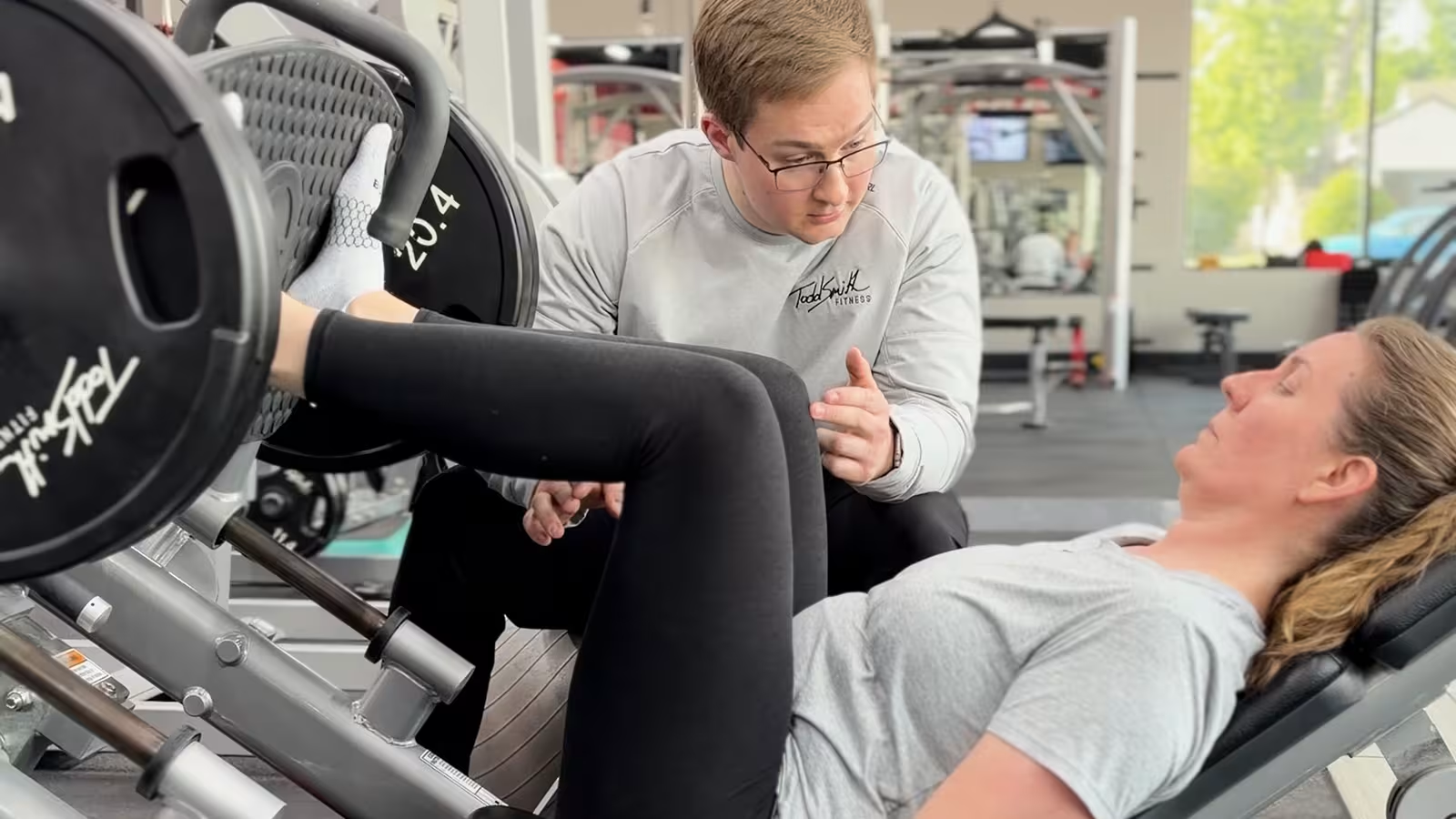
During the set, the trainer is at your side. Not nearby. At your side.
Form doesn't fail at the beginning of a set. It fails when the muscles fatigue — set three, rep four, the last two reps of a working set. That's when the body starts compensating. Hip flexors take over from glutes. Shoulders round because the upper back is giving out. Knees cave because the quads are done and the body is recruiting whatever's left to finish the movement. That's when joint stress climbs. That's when the gap between where the load lands and where you want it to land gets wide.
A trainer watching the room catches the problem at the end of the set, if they catch it at all. A trainer watching you catches it mid-rep. The correction happens during the set, not after — which means the remaining reps are done correctly, not after the damage is already in.
After the set, the trainer calibrates. Was that too heavy? Too easy? Was the fatigue in the target muscles or somewhere it shouldn't have been? The answer to those questions shapes what happens next — not what the program says happens next.
That's constant supervision. Every rep. Every set. Every session.
Why It Matters for Bodies Over 40
Strength training works by applying a stimulus and letting the body adapt. The problem is that the stimulus has to land in the right place. A squat that loads the quads and glutes produces one adaptation. A squat that compensates through the lower back and knees produces a different one — and that second one is the one that accumulates over time into chronic joint issues.
Adults over 40 have bodies with less tolerance for poorly directed load. The connective tissue is less forgiving. The joint surfaces have more history. The margin between productive stimulus and compressive damage is narrower than it was at 25. That doesn't mean adults over 40 can't train hard — it means the training has to be accurate.
Accuracy requires watching. Not occasionally, not when a problem is obvious — constantly, because the form breakdowns that matter most are subtle and happen when the body is working hardest. A 2-degree shift in knee tracking during the final rep of a heavy set isn't something a trainer catches from across the room. It's something a trainer catches when they're standing close enough to see it and experienced enough to recognize what it means.
This is why three hours a week done with constant supervision outperforms five unsupervised hours. The dose isn't the variable. The accuracy is.
Why the Cap at 4 Makes It Possible
Constant supervision has a structural requirement: the trainer-to-member ratio has to stay below the threshold at which real-time watching becomes impossible.
At TSF, that number is four. One coach, four members. That ratio is what makes constant supervision an actual commitment rather than a marketing phrase. With four people, a trainer can watch every person during every set, know each one's history, and correct form in real time. With more than four, the trainer starts managing the room instead of coaching the individuals in it. Supervision distributes and thins. You're watching the average.
The cap at 4 isn't the product. The constant supervision it enables is the product. The cap is what makes the product possible.
The Difference It Produces
The adults who train at TSF for years — and there are members who've been training here for 10, 20, 30 years — are training in bodies that have held up. Not because they trained easy. Because they trained accurately.
Why more training isn't better comes down to the same principle: volume without accuracy isn't more stimulus. It's more exposure to poorly directed load. Constant supervision is what makes the hours you put in actually translate into the adaptation you're after.
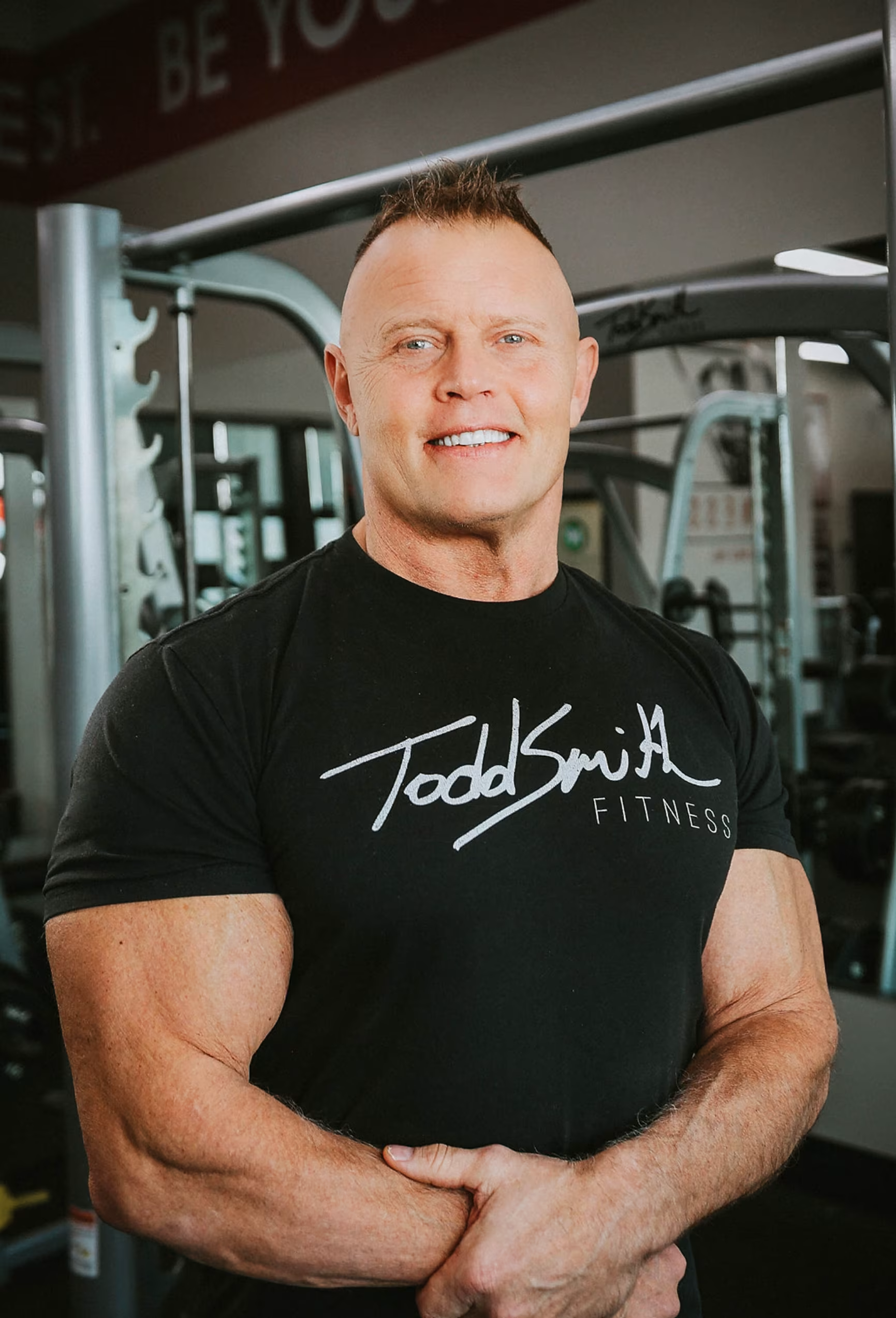
There's a phrase Todd uses: if you are not exactly right, you are completely wrong. It sounds like a hard standard. It is. But it's also the reason the methodology produces results that last.
Every rep watched isn't a tagline. It's a description of what actually happens in the room.
If you want to see what a constantly supervised session looks like in practice, talk to a coach — the discovery call is free, and you can ask every question you have about the format before you commit to anything. Or if you're ready to understand the full membership structure, see how TSF membership works.