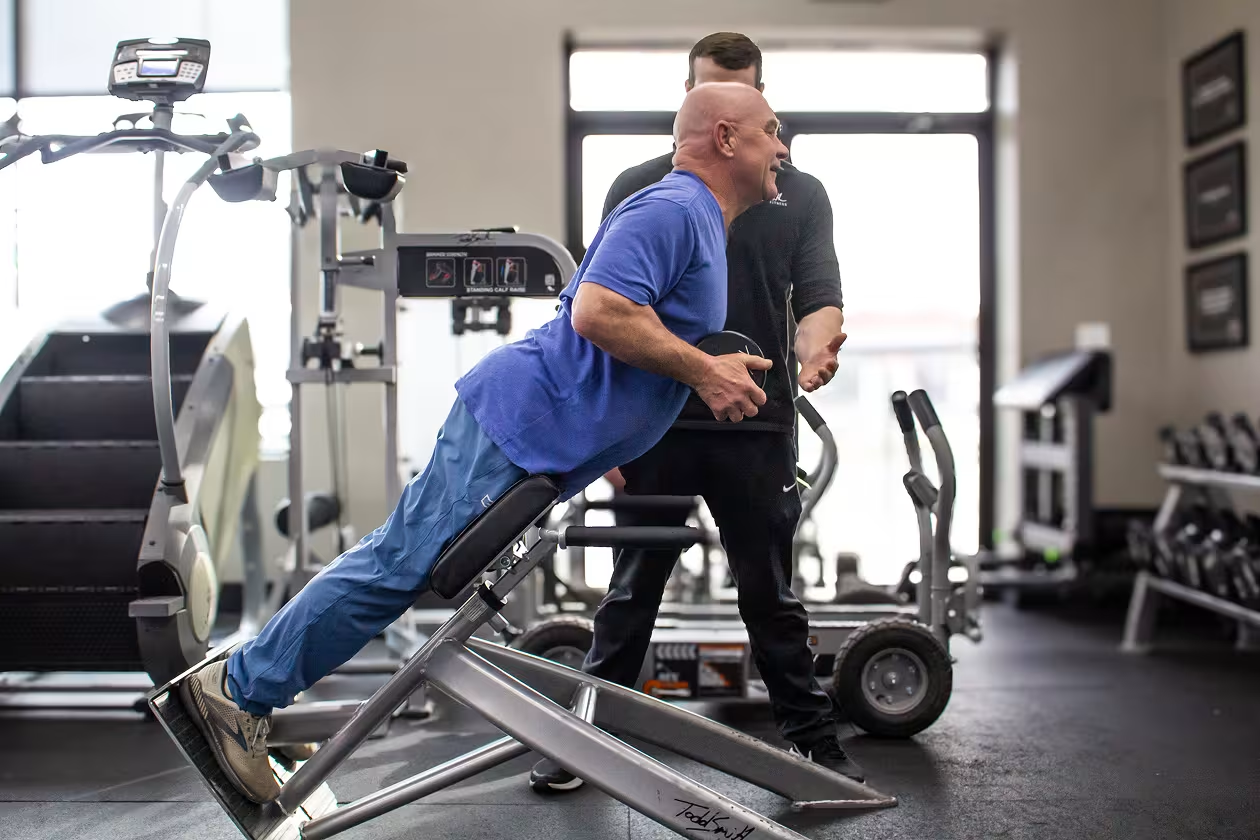
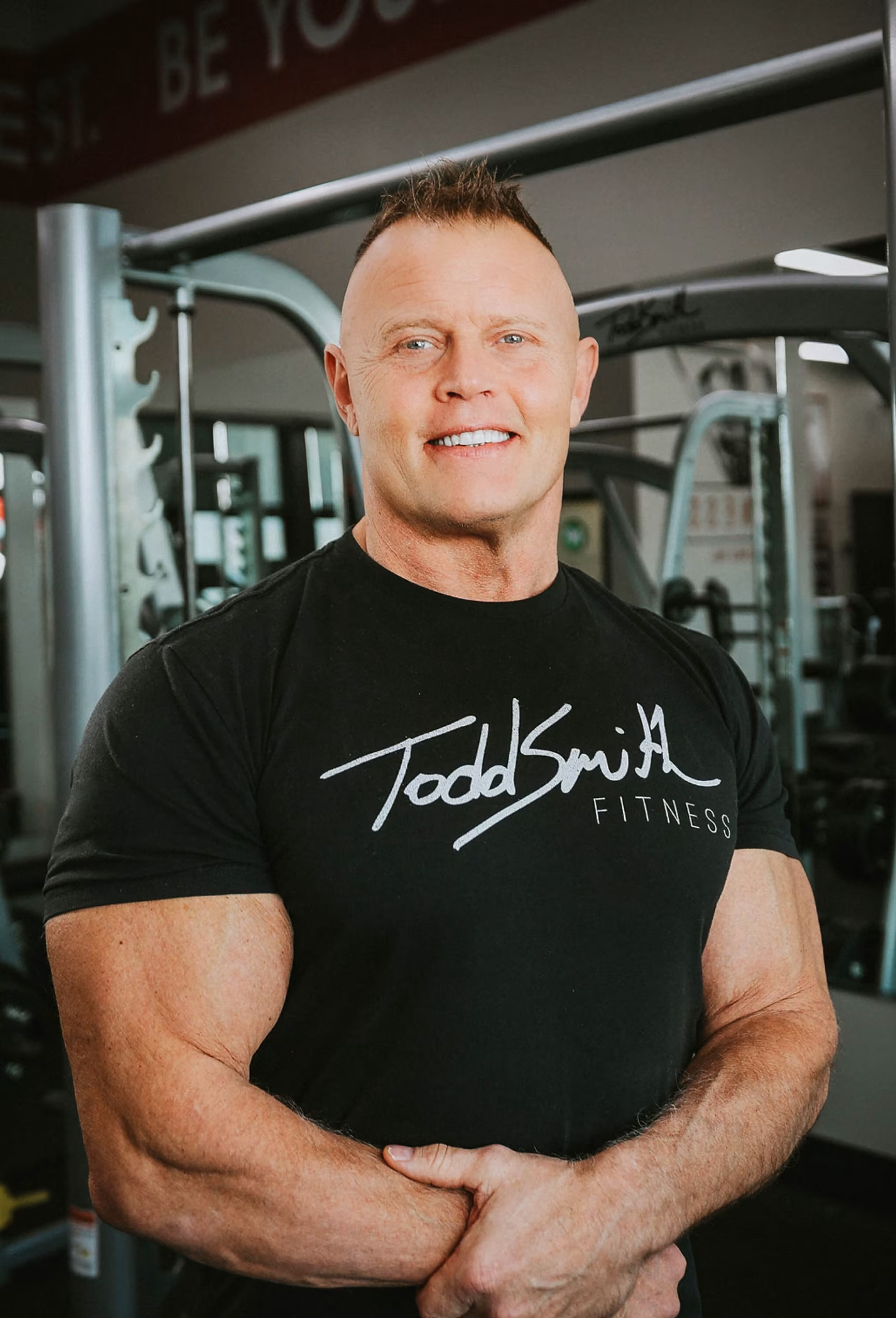
The number one goal at Todd Smith Fitness is to put as much muscle on our clients' bodies as we can.
Not weight loss. Not calorie burn. Not a number on a scale. Muscle.
If you've trained here for any length of time, you've heard this. If you're new to TSF — through a reel, a podcast, someone you know — you're probably wondering why. It's a strong position. Here's the case.
What the Scale Doesn't Measure
A scale measures gravity. How much the earth is pulling on you right now. That's it.
It doesn't measure how strong you are. It doesn't measure your muscle mass. It doesn't measure your metabolic rate, your bone density, your energy, your posture, or your chances of living well into your 70s and 80s. It measures one thing, and that one thing is the least interesting number on the InBody.
TSF uses the InBody — it's a useful tool for tracking body composition over time. What we don't do is optimize for it. Because the question worth asking isn't "how much do you weigh?" The question is "how much muscle do you have?"
The Tissue That Runs Everything
After 40, muscle loss accelerates. Not overnight — gradually, quietly. The clinical term is sarcopenia. The practical reality shows up as a back that takes longer to recover, stairs that cost more effort, a metabolism that seems to need less food to gain more weight.
Most adults attribute this to aging. It is aging — specifically, it's muscle loss presenting as aging. That distinction matters because one of those things you can address.
Strength training, done correctly and consistently, slows the loss. More than that: it reverses it. Adults who build muscle in their 40s carry more into their 50s. Adults who build muscle in their 50s are still gaining in their 60s. The TSF member population is proof. Thirty years a member, still getting stronger, still mobile — not because they were lucky, but because they showed up for three hours a week for a long time and protected the tissue that runs everything else.
Why Muscle Is Metabolism
Here's the fact most diet culture skips: muscle is metabolically expensive. It burns calories at rest. The more muscle you carry, the more your body burns just maintaining itself — and the more you can eat without consequence.
When you chase weight loss on low-calorie cycles, you often lose muscle alongside fat. The body under caloric stress burns what it doesn't need — and muscle gets the signal. Each cycle of lose-gain-lose-again starts from a slightly lower metabolic floor. Todd calls this the inevitable road back to the starting line. You keep beginning again, but the starting line keeps getting harder, because you crashed your metabolism getting there.
Build the muscle first. The metabolism follows. When you eat, you eat to fuel muscle — not to move a number in the right direction on a device that measures gravity.
Muscle Is Body Armor
Strong muscles move you. They also protect you.
A strong posterior chain means your lower back has real support instead of relying on the bones and discs alone. Strong glutes mean your knees track correctly. Strong shoulders mean the joint has something to stabilize it across a lifetime of reaching, carrying, and lifting things overhead. Muscle is structural — it's the tissue standing between your skeleton and everything the world throws at it.
Muscle is body armor. That's not a metaphor for gym motivation. It's the literal mechanical function: every pound of muscle you build is a pound of protection for the joints, bones, and systems underneath.
The members at TSF who have been training for 10, 20, 30 years aren't walking around without pain because they got lucky. They're walking around without pain because they built something structural. The armor held.
Muscle Is the Hidden Fountain of Youth
Longevity research keeps landing on the same finding: muscle mass is one of the strongest predictors of healthspan. Not just how long you live — how well you live during those years.
More muscle means higher metabolism, better glucose regulation, better posture, more energy in daily life, lower fall risk, and a slower rate of functional decline. The research stacks in the same direction every time. TSF's muscle-first methodology arrived at this conclusion 40 years before the research confirmed it — not through academics, but through watching. Hundreds of adults, tracked over decades. The ones who built muscle lived better. Anecdote became pattern. Pattern became methodology.
The TSF Position, Plainly Stated
Stop losing. Start gaining.
Gaining muscle. Gaining posture. Gaining strength. Gaining energy. Gaining years.
That's the reframe TSF has been making since 1986. Not a weight-loss program. A strength program. Weight loss is a downstream effect of building muscle and fueling it correctly — a side effect, not the goal. Chase the side effect directly and you end up on the road back to the starting line. Chase the muscle and the rest follows.
Three hours a week, every rep supervised, every exercise selected for maximum stimulus and minimum joint cost. That's how the methodology works — and that's what the results over 40 years are built on.
If you want to understand what muscle-first training looks like in practice, see how TSF membership works — or talk to a coach if you want to know whether it's the right fit for your body.