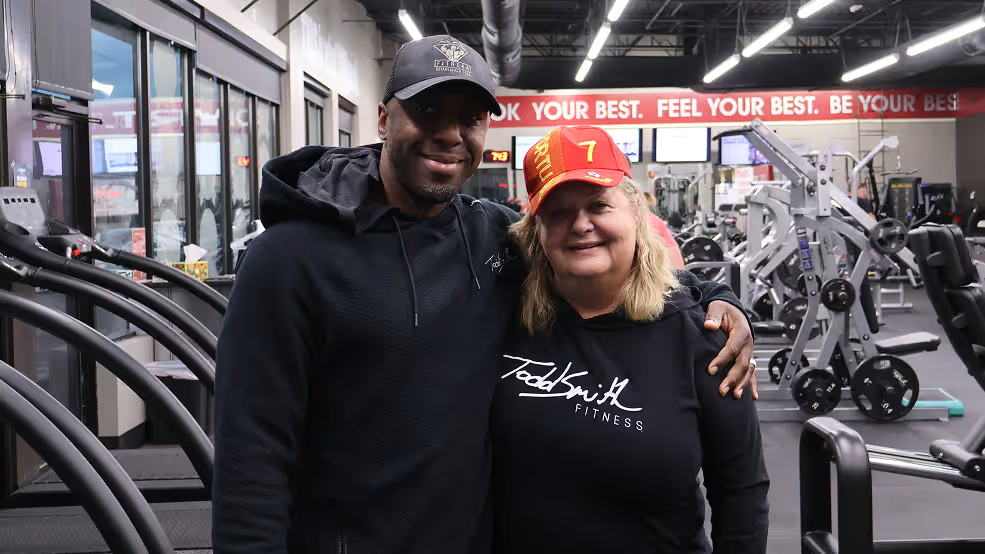
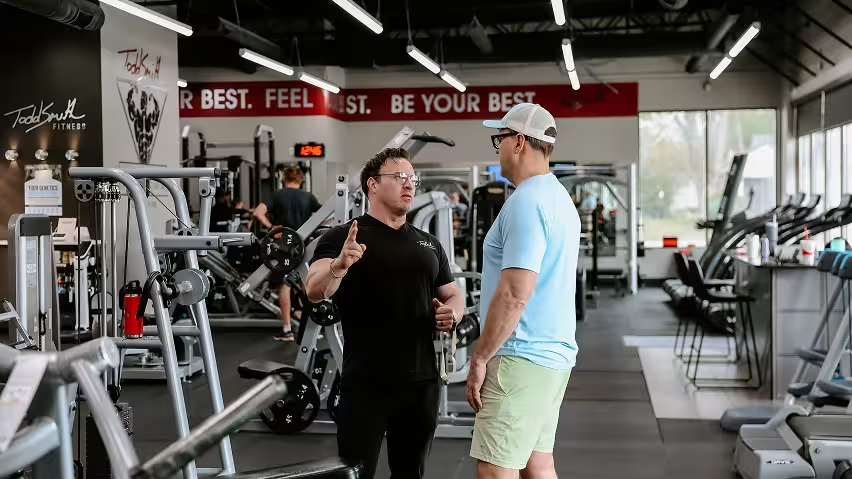
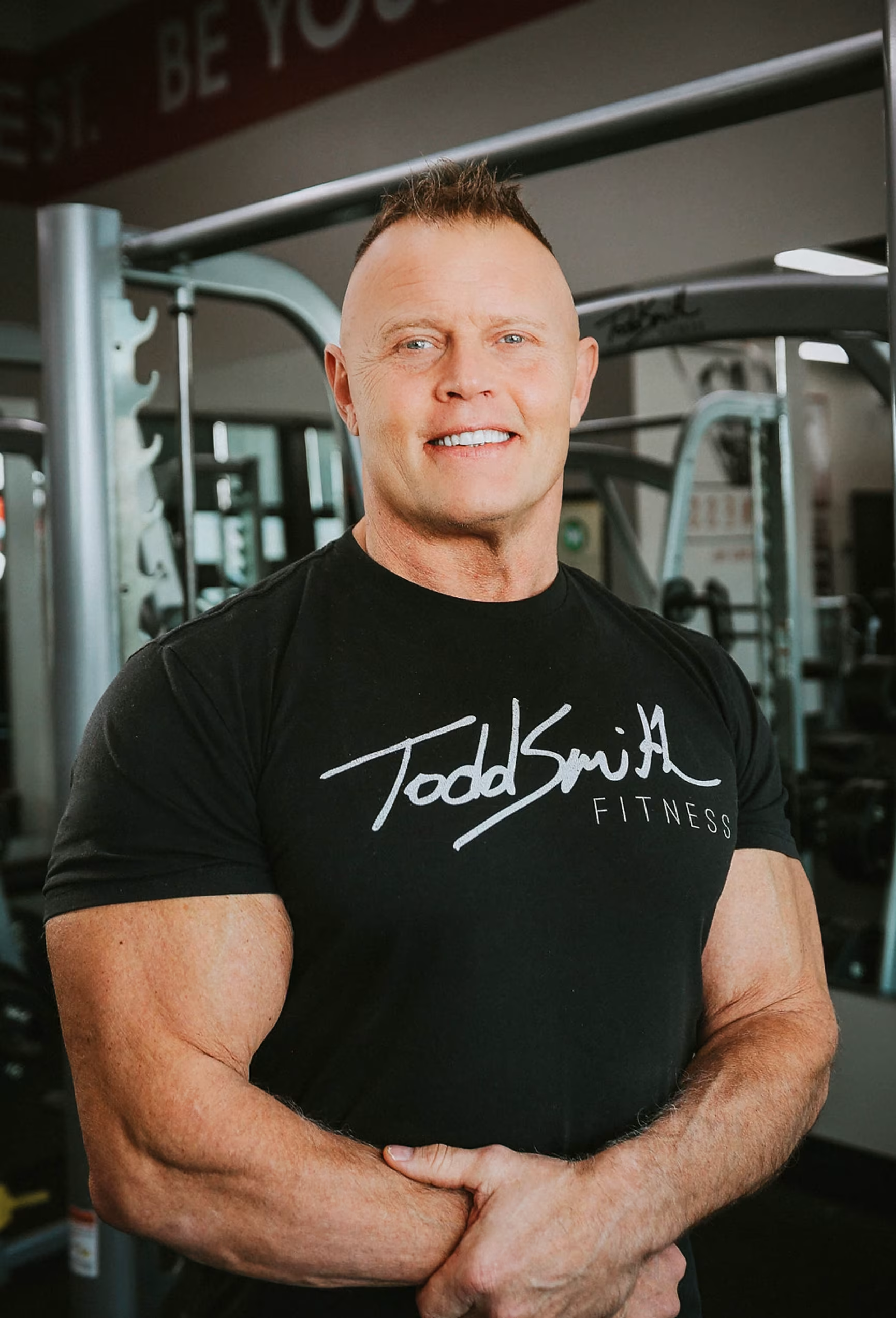
Todd Smith didn't start Todd Smith Fitness because he loved fitness culture. He started it because he watched what happens when nobody helps the people who need it most.
The catalyst was his father.
Born in 1925, Todd's father grew up in the Depression — The Grapes of Wrath circumstances. His family went broke, loaded a truck, and drove from Phelps City, Missouri to California to find work. He only made it to the sixth grade. He went through times with no food at all. And when he finally had the means to buy it, he overcorrected. That emotional relationship with food — the childhood void of it, the adult compulsion for it — became the shape of his body and his health for the rest of his life.
Todd watched all of this from a distance of 23 years. He was the youngest child, his sister 23 years older. He saw the pain and discomfort that came with a woman who was 150 pounds overweight. The health issues. The emotional weight that comes with a body you're not at home in. And somewhere in watching that, a direction formed.
"I wanted to help the mature adult. I wanted to help the person that I felt needed it the most." — Todd Smith
Not the Football Coach
When Todd came of age in the fitness world, the aspiration most young trainers had was to work with athletes — football teams, programs with trophies, the Hall of Fame.
That never interested him.
His role models were Boyd Epley, the founding strength coach of the Nebraska Cornhuskers and one of the architects of modern collegiate strength training, and Louis Simmons, the founder of Westside Barbell and inventor of the reverse hyperextension. Men who built systems. Men who applied principles to bodies — not just chased athletic performance.
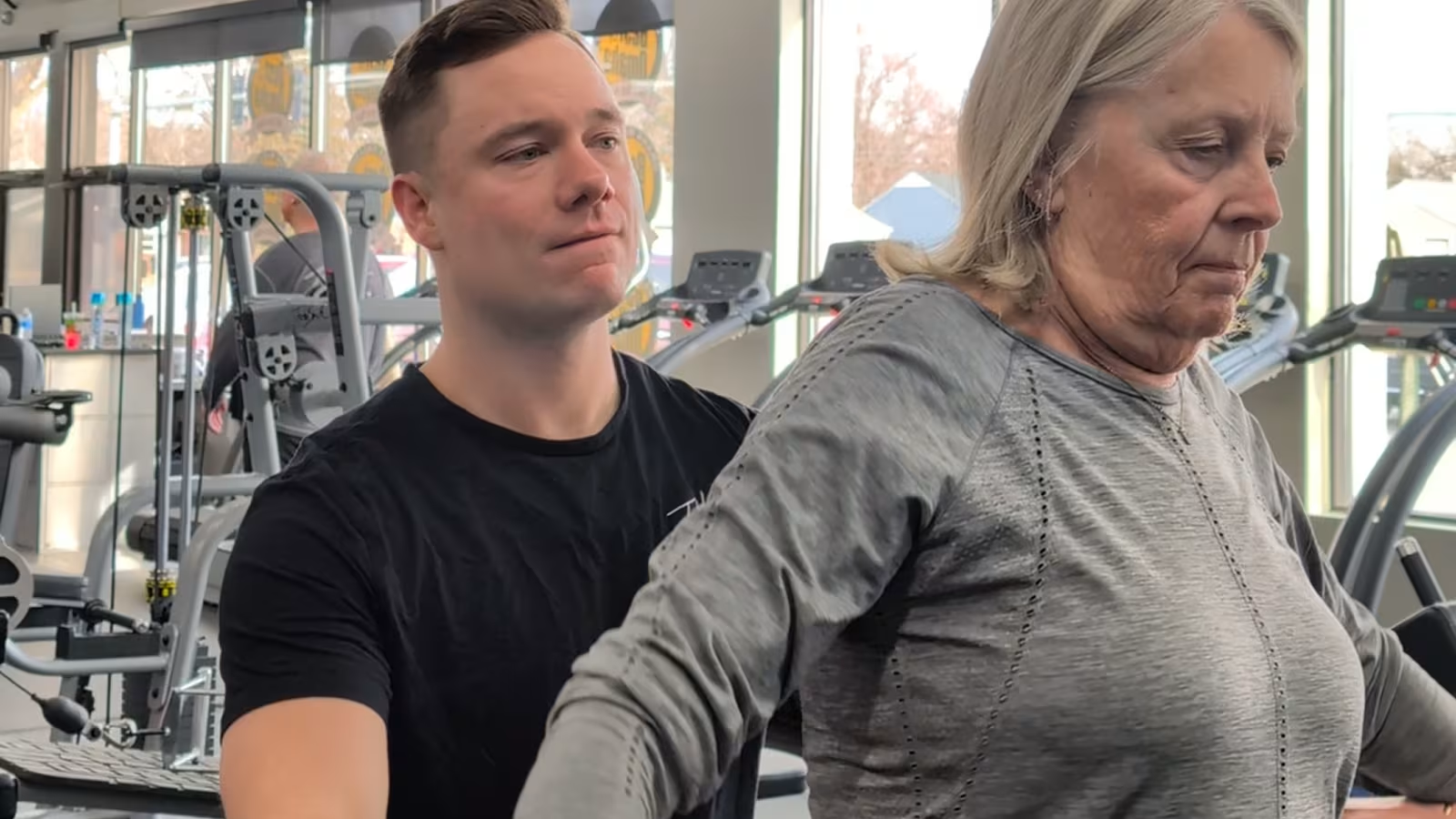
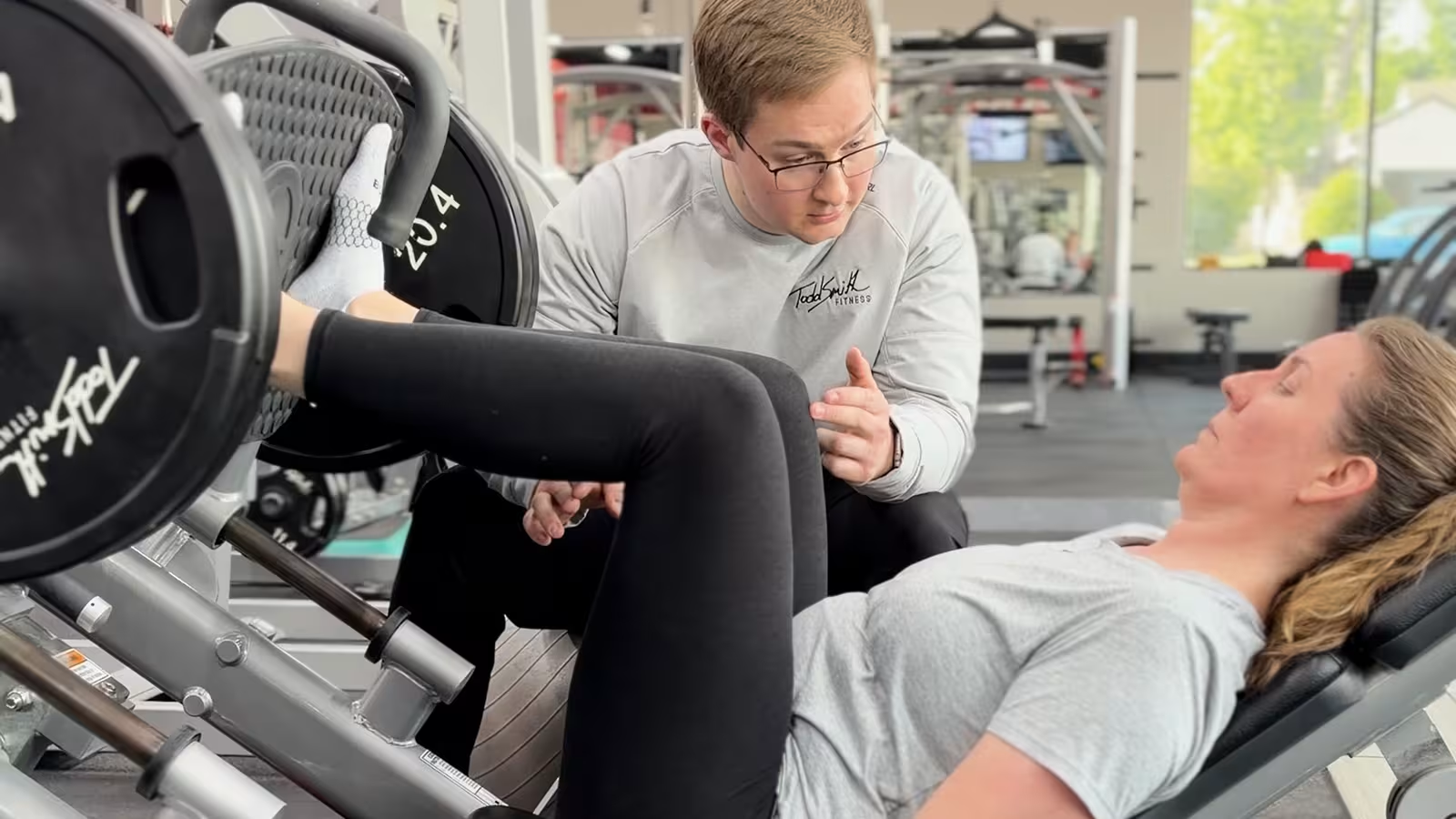
What Todd wanted was to apply that level of rigor and attention to the person fitness culture consistently ignored: the mature adult. Somebody in their 40s or 50s looking for answers. Someone who needed direction, accountability, a program built for their body and their life — not borrowed from a world that looked nothing like it.
The Fitness Landscape in 1984
The year Todd opened in Omaha, the fitness industry had two dominant philosophies — and neither was built for the population he cared about.
The first was the cardiovascular model: Dean Ornish, the Cleveland Clinic approach, long steady-state cardio, aggressive dietary restriction. The people who followed it lost weight. They also lost muscle, lost posture, "looked horrible" with "not a stitch of muscle." The model treated cardio as the primary tool and ignored the structural consequence of losing lean mass in the process.
The second was the Arthur Jones model — Nautilus machines, extremely high-intensity resistance training, no cardio, high fat and protein. Jones was a genius and a provocateur, and his ideas about mechanical loading were ahead of their time. But his approach was built around intensity maximization that assumed athletic baseline and full recovery capacity.
Neither prescription fit the 48-year-old banker with a demanding schedule, a shoulder that had some history, and three hours a week to give. That person — the person Todd had grown up watching suffer — had no one building a system for them.
So he built one.
Observation as Method
Todd has described his own learning process in a specific sequence: observe, discern, disseminate, practice, then teach.
He's not a great innovator, he says. He's observant. And across 41 years and more than 100,000 hours of one-on-one work with adults, that observational discipline became the methodology that defines TSF.
He found his early thinking in two books, discovered in what he describes as "a hazy downtown bookstore where barefoot hippies offered coffee": Nutrition and Physical Degeneration by Weston Price, and Keys to the Inner Universe by Bill Pearl. Not the mainstream texts of the era. Books that asked harder questions about what bodies actually needed.
"I read a book and I'd be like, 'This is exactly the way it's supposed to be.' It took me until I was about 50 to figure out I need to discern, disseminate, and practice." — Todd Smith
The method he arrived at wasn't built from theory — it was built from watching what happened to real people in real bodies across real decades. What built muscle without wrecking joints. What adults could actually sustain week to week, not just survive for six weeks. What happened to people who trained consistently for 10 years versus people who trained intensely for one.
30 Years Later, Still in the Room
In 1995, TSF produced an infomercial — Todd Smith's I Can Do It — that sold 100,000 copies and ran nationally across the United States. The concept at the center of it, the inevitable road back to fat, illustrated what happens when people diet without building muscle: metabolic rate drops, the diet breaks, and the weight that comes back is stored as fat. It's the same argument Todd makes today, because it was right then and it's still right.
"Muscle mass is the true dictator of your metabolic rate." — Todd Smith
Thirty years on from that infomercial, the business still runs entirely on referrals. No advertising, no lead-gen, no constant churn of members. The stated reason is the same now as it was in 1984: the work is to be so good for the people already in the room that they stay for decades.
TSF has members who have trained there for 30 years. 100 people who have been members for 20 years or more. Not because they found a shortcut — because they found a methodology built for the body they actually have, coached by someone who has been watching adult bodies respond to training since before most fitness apps existed.
The lessons that came out of 41 years of that watching — muscle first, recovery as the mechanism, individualization as the foundation — weren't written first and then applied. They were observed first, across thousands of real people, and then distilled into the program that now runs every session at TSF.
The origin story and the current methodology are the same story.
If you want to train with a system built on 41 years of watching what actually works for adult bodies — and a coach built from the same principles — talk to a coach. The discovery call is free, and it starts with your specific situation — your history, your body, where you actually are right now.