If you're 45 and walked into a CrossFit class, you'd leave hurt. There's a reason.
CrossFit was built for 22-year-old athletes with full recovery capacity and joints with no history. The programming that builds those athletes — high volume, high intensity, complex movements at maximum effort — is exactly the wrong prescription for an adult who needs to be functional at work on Wednesday and still training at 65. Most fitness culture is built around that demographic and applied, poorly, to a completely different one.
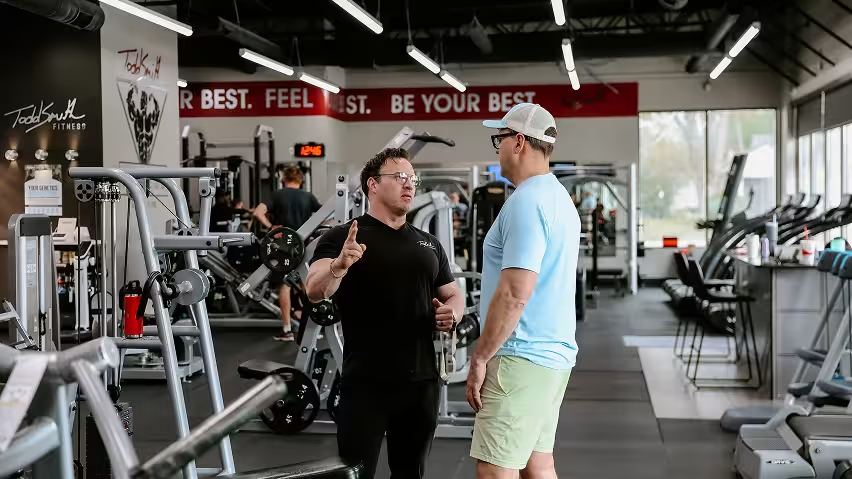
The adults who train at TSF are 40, 52, 67. Bankers and physicians and business owners. They have accumulated joint history, demanding schedules, and recovery capacity that isn't what it was at 28. Micro-group strength training at TSF was built around their reality — not around the population it's easiest to market to.
What Changes After 40 (and What Training Has to Account For)
The body at 45 isn't a slower version of the body at 25. It's a different training environment.
Recovery takes longer. Connective tissue — tendons, ligaments, joint cartilage — accumulates load more slowly and repairs more slowly than muscle. An intensity level a 24-year-old trains through without consequence is, for a 48-year-old with a knee that's been watched for two years, a problem that compounds. Training that's sustainable across decades has to account for this — not as a ceiling, but as a reality that shapes every programming decision.
Muscle is still the goal after 40. That doesn't change. But the path to building it runs through quality, not volume. Getting stronger requires high-quality mechanical tension on the target muscle across each rep. Volume that's executed sloppily doesn't produce the same adaptation as lower volume executed precisely — and for adults 40+, the body has less tolerance for the imprecision.
The recovery window also changes. Three hours a week of well-coached, supervised training outperforms five unsupervised hours every time. Because the 40+ body needs the gap between sessions to complete the adaptation. Compress that gap with volume the body can't absorb, and progress stalls — or reverses.
Why Micro-Group Works for This Population
These realities are the exact reasons the micro-group format works for adults 40+.
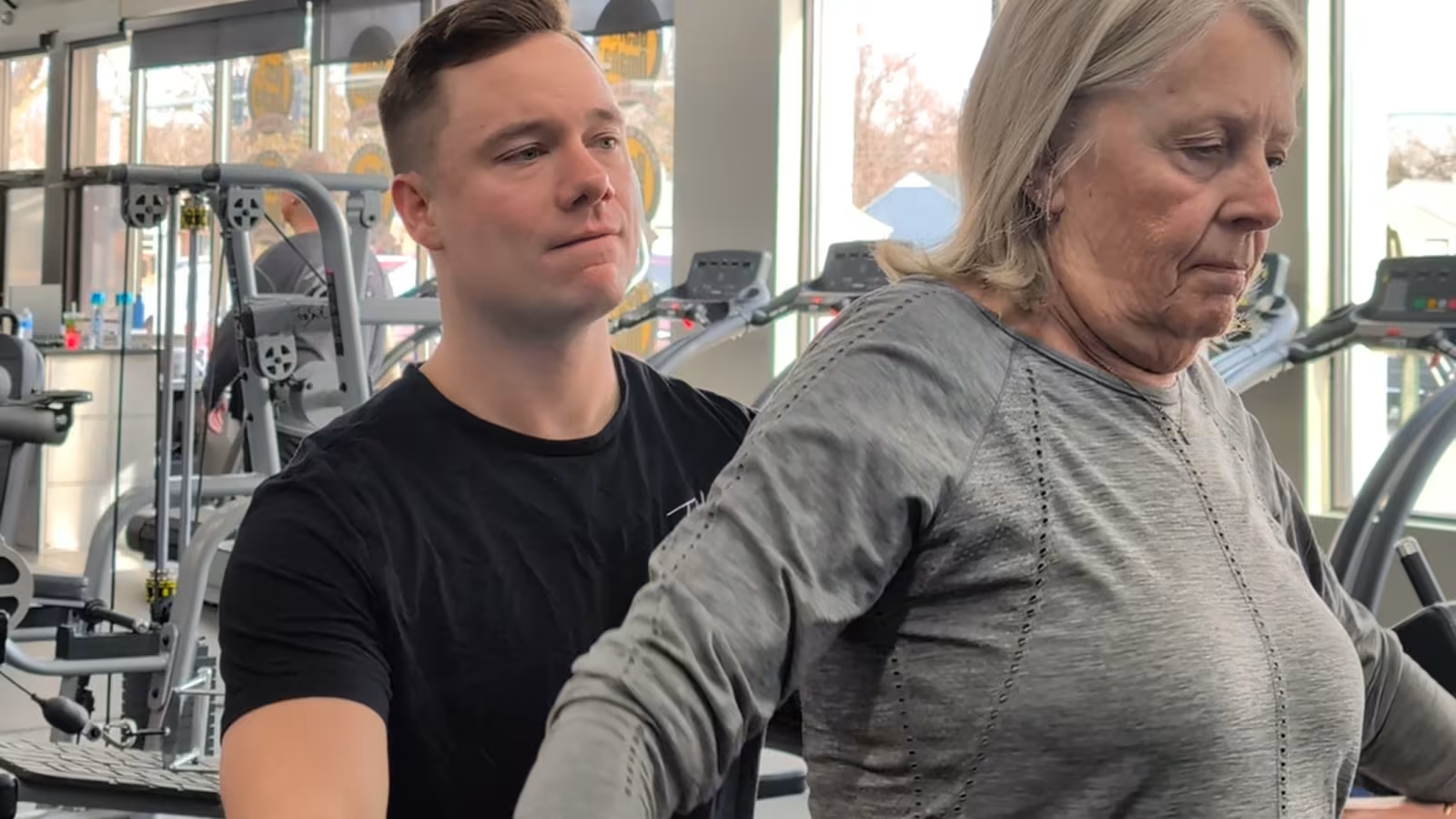
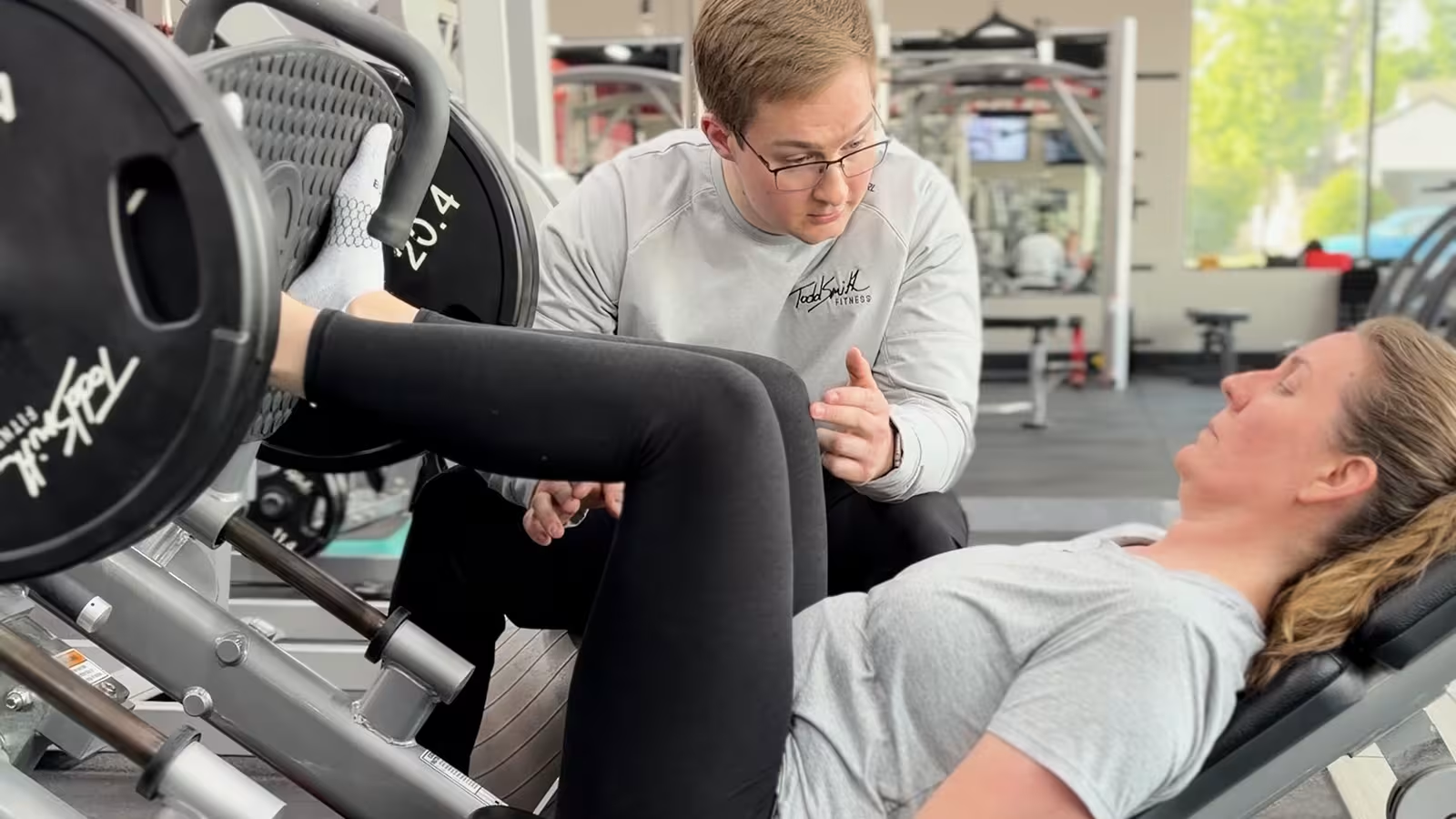
The coach-to-member ratio — three people maximum, one coach — means every rep gets watched in real time. For adults with joint history and accumulated wear, this is the piece that matters most. A deviation in form that feels normal to the person doing it — a knee tracking slightly wrong, load drifting away from the target muscle, a range that's shortened without anyone noticing — is visible to a coach who's paying full attention. Catching it in the moment isn't a nicety. It's the difference between a session that builds something and one that quietly costs something.
The format also allows individualization within a shared structure. Three adults in the same micro-group might be working different exercises, different loads, different ranges of motion — calibrated to their specific bodies, not averaged across the group. A micro-group session at TSF isn't a smaller group fitness class. It's three individualized training sessions running in parallel, with a coach moving between them.
If you're weighing whether micro-group or one-on-one training is the right format for your situation, here's how those two options compare. This piece is specifically about what micro-group training looks like for bodies over 40 — and why the format is built for them.
What a Session Actually Looks Like
No two TSF sessions look identical. But the structure is consistent.
Every session starts with what the member is bringing into the room that day. For adults 40+, this context changes the work. A member who hasn't slept, or who has a hip that's been tracking wrong since the weekend, gets a session calibrated to that reality — not the one on the program that didn't account for it. A coach who knows your body well enough to notice that you're moving differently today is doing something a program can't.
Exercises are chosen on a risk-vs-benefit basis. For every movement, the question is: does the training return to the target muscle justify the joint cost for this body? For adults with history, many standard gym exercises fail that test — not because the exercise is wrong in the abstract, but because the cost isn't worth it for this specific body at this stage. The program adapts. The methodology stays the same.
Progression happens when the coach determines the body is ready — not when the calendar says so. When form is solid and the current load is being absorbed cleanly, the work increases: more load, slower tempo, greater range, more complexity. That call belongs to the coach, not a spreadsheet. And for adults 40+, that distinction matters more than anywhere else.
The Same Three Hours, Built to Last
The TSF members who are in measurably better shape at 63 than they were at 48 didn't get there by training harder. They trained precisely, consistently, with someone watching — for years.
Micro-group training works for adults 40+ for the same reason it works across all of TSF's methodology: the bottleneck is never the program. It's the execution. And execution, for bodies with history and a long horizon ahead, requires a coach in the room who can see what's actually happening — rep by rep, session by session, year by year.
That's what 41 years of coaching adults has built. That's what three hours a week at TSF looks like.
If you're in Omaha and you're 40+ and you want to understand what this looks like for your specific body, talk to a coach. The discovery call is free. It starts with your history, your body, and what you're actually working toward.