Todd Smith has had one job for 40 years.
Not one industry. One job: coaching adults to build strength. He opened Todd Smith Fitness in Omaha in 1986 and has been doing the same thing ever since. Not pivoting with trends. Not rebranding. Coaching adults, one session at a time, in the same city, with the same focus.
The methodology behind TSF wasn't written in a textbook. It came from the work itself — from watching what happened to real people in real bodies over real decades, and adjusting based on what that watching revealed.
Where It Started
1986, Omaha. One trainer, working with adults who wanted to get stronger and stay that way.
The fitness industry at the time was built around two things: bodybuilding culture and aerobics classes. Neither was designed for the person in their 40s or 50s who wanted to be stronger at 60 than they were at 50, with a body that had some history behind it.
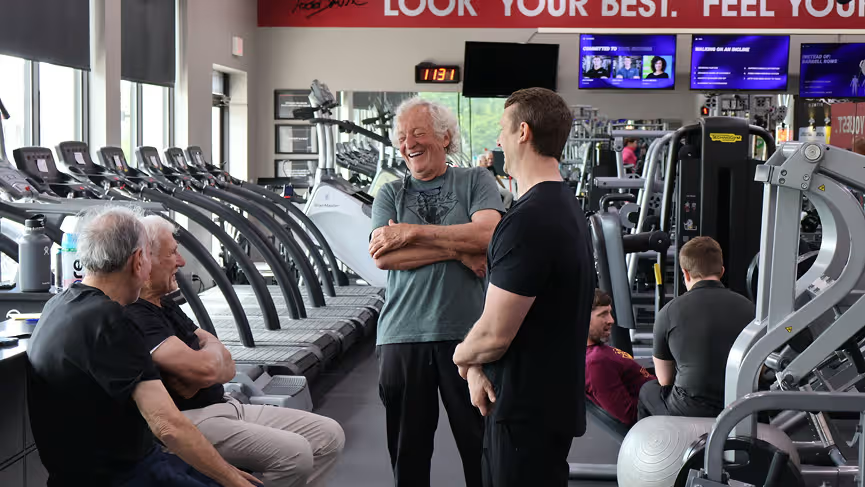
Todd coached those people instead. Adults who weren't athletes, weren't 25, and weren't training to compete — they were training to live well. Bankers and teachers and physicians and business owners. People whose bodies had accumulated wear, whose schedules had real constraints, and who needed a training approach calibrated to that reality rather than borrowed from competitive sports.
That was the early insight that shaped everything: the population matters. The right program for a 22-year-old with no joint history and unlimited time is the wrong program for a 48-year-old with a shoulder that's been watched and three hours a week to give. You can't take a program built for one and run it on the other.
How the Methodology Was Built
There was no grand theory first. The methodology was built by watching.
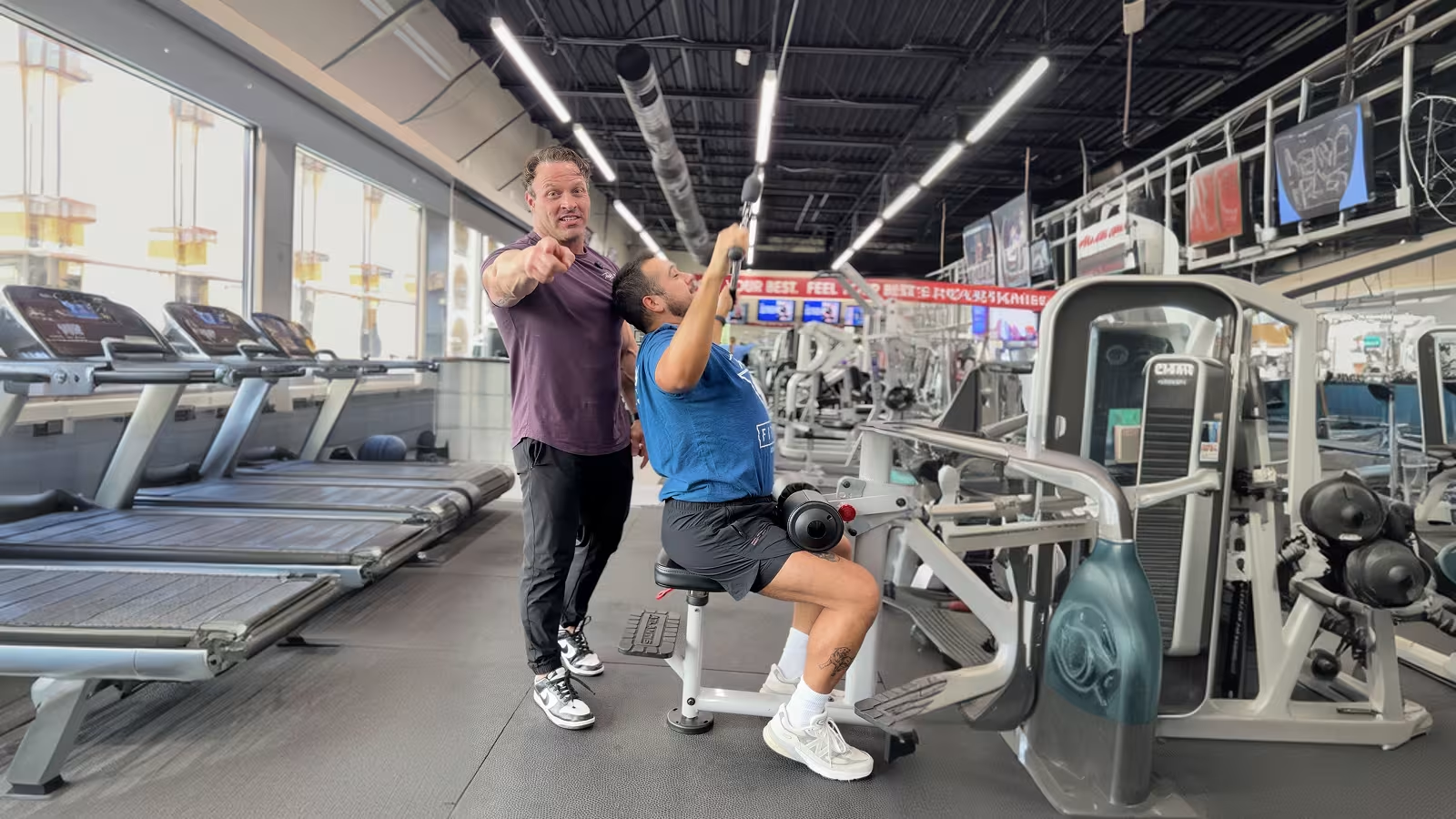
Across 40 years and more than 100,000 hours of one-on-one work with adults, Todd observed what built strength and what broke it down. What produced results that lasted across years, not weeks. What helped 55-year-olds get stronger and what wore them out. What people could actually sustain — not in an ideal week, but in a real one.
The methodology that runs TSF today is the residue of all that watching.
Muscle first. The adults who trained for years without seeing lasting results were almost always training wrong: lots of cardio, aggressive caloric restriction, volume without structure. They were losing muscle alongside fat, slowing their metabolism, setting up the cycle over and over. The observation was consistent enough to become a rule: build the muscle first. The body composition follows. Why muscle matters most for adults over 40 — and why losing it creates problems that take years to reverse — is now one of the clearest arguments in the TSF methodology.
The dose. How much training adults actually need to build strength is a different question from how much they can survive. Three hours a week, built correctly and supervised completely, is more effective than five unsupervised hours. Todd arrived at three hours a week as the dose the same way he arrived at everything: by watching what happened when people trained at different volumes over long periods of time. The adults who trained at TSF for 20 or 30 years weren't grinding six days a week. They were training three hours a week and getting consistently stronger.
Recovery as part of the work. For adults over 40, recovery isn't a nice-to-have. It's the mechanism. Adaptation happens during recovery, not during training. A program that ignores this doesn't just fail to optimize — it breaks down the person following it. Spacing sessions correctly, keeping the volume high-quality rather than high-quantity, and treating rest as a structural component of the program rather than an inconvenience: these came from watching what happened to real people when programs didn't account for them.
Risk vs. benefit in every exercise. The goal is maximum muscular stimulation with minimum joint cost. That's not a marketing line — it's how every exercise gets evaluated at TSF. Some movements that are standard in fitness culture carry joint load that isn't worth the training return for adults with bodies that have accumulated wear. Those movements get swapped. The standard isn't "can they do it" — it's "does the benefit justify the cost for this body."
The Business Is the Proof
Todd has run TSF on referrals since the beginning. No advertising, no lead-gen campaigns, no constant churn of new members filling the seats vacated by clients who didn't get results.
"I spend zero time on acquiring new clients. The work is to be so good for the existing ones that they stay for decades." — Todd Smith
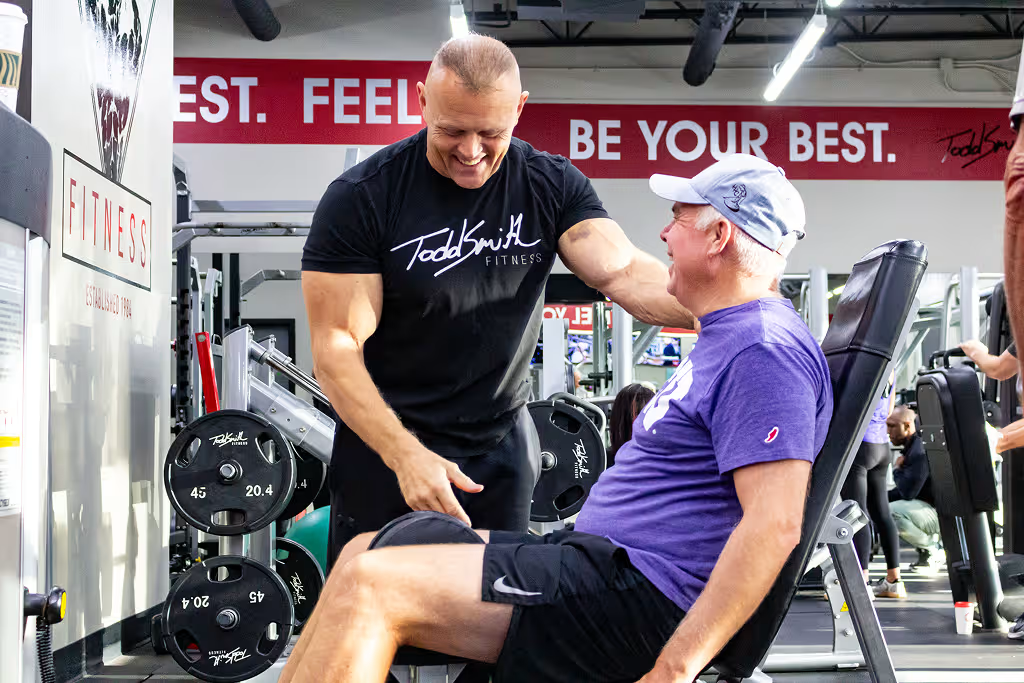
That's the model. And it has worked for 40 years in the same city, with the same approach. Members who have trained at TSF for 20 and 30 years are the track record — adults who are measurably stronger and more capable in their 60s and 70s than they were in their 40s. Not because they found a shortcut. Because they built something real and sustained it.
The methodology at TSF isn't marketing. It's the accumulation of four decades of watching what works for adult bodies and refusing to offer anything else. You can read more about the person behind it on Todd's about page.
What It Means for You
You're not looking for a new trend. You're looking for something built on evidence that's older and more reliable than last year's fitness content.
Forty years. One city. One focus. The methodology didn't come from a conference or a certification module — it came from being in the room every day for four decades, watching what actually happened to real people who trained consistently over time.
That's what you get when you train at TSF.
If you want to understand how the methodology applies to you specifically, talk to a coach — the discovery call is free and there's no obligation. And if you want to understand the structure behind the sessions, why we cap our micro-groups at 4 people explains the design.