Two people can walk into a gym with the same goal and need two completely different plans to reach it.
Same age. Same stated objective — lose weight, build muscle, move better. On paper, identical. But the people are not. One played soccer in college and spent the last decade behind a desk with a hip that's been watched for three years. The other has never followed a structured program, avoids anything that makes her back talk, and has tried and quit five different routines since she turned 48.
Give both of them the same program and one of them quits by week four. Probably both.
This is the problem with generic fitness plans — not that the information in them is wrong, but that they're written for no one in particular. A personalized fitness plan isn't a luxury. For adults with history, it's the only kind that actually works.
Your History Is the Starting Point, Not the Obstacle
Every person who walks into TSF brings a fitness history that is as individual as a fingerprint. It includes every sport they played, every program they tried, every injury they worked around, every diet they started and stopped. It includes what they enjoy, what they avoid, what they recover from, and what causes them to quit.
Most coaches treat that history as a list of limitations. We treat it as a map.
What has worked for you before? What caused pain — not just physical, but motivational? Which movements feel natural, and which never seem to connect? When life gets busy, what's the first habit to disappear? Do you respond well to structure, or do you feel trapped by it? Do you need variety to stay engaged, or does too much variety prevent you from getting good at anything?
Your physical patterns matter. Your mental patterns often matter more.
Some people need to be challenged to do more. Others need permission to stop believing that every session has to leave them wrecked. Some need clear nutrition targets. Others need fewer rules so they can finally become consistent. None of those things show up in a generic program. They only show up when a coach has been paying enough attention to see them.
Methods Are Tools
The fitness world has a habit of turning useful methods into universal rules. One training style becomes the only way to train. One diet becomes the answer for everyone. A method may work extremely well and still be the wrong tool for the person standing in front of you.
At TSF, we've had 42 years and more than 100,000 hours of one-on-one work with adults to see what actually happens when a good method meets the wrong person — and when a simple adjustment turns a stalled plan into one that finally works.
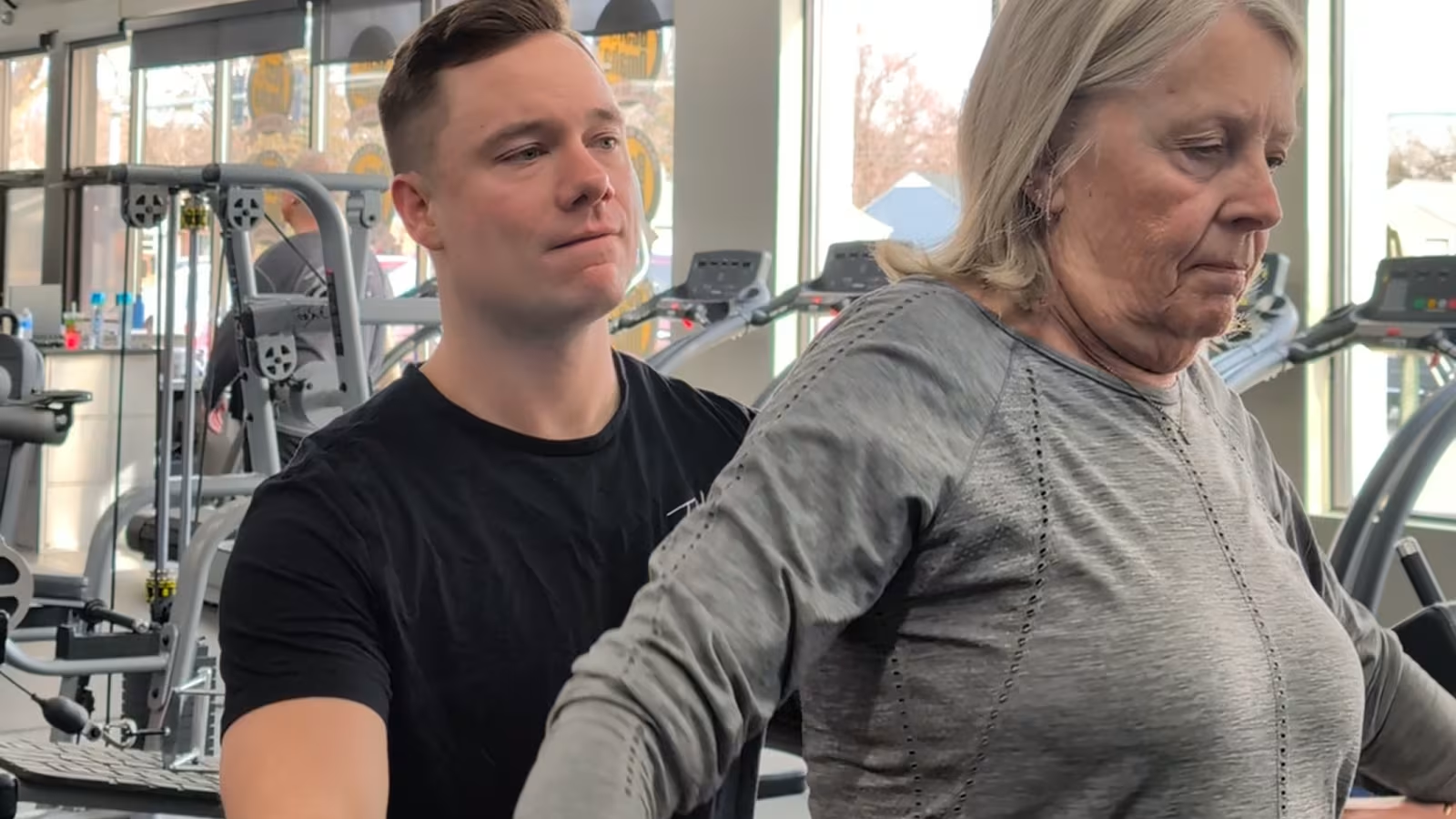
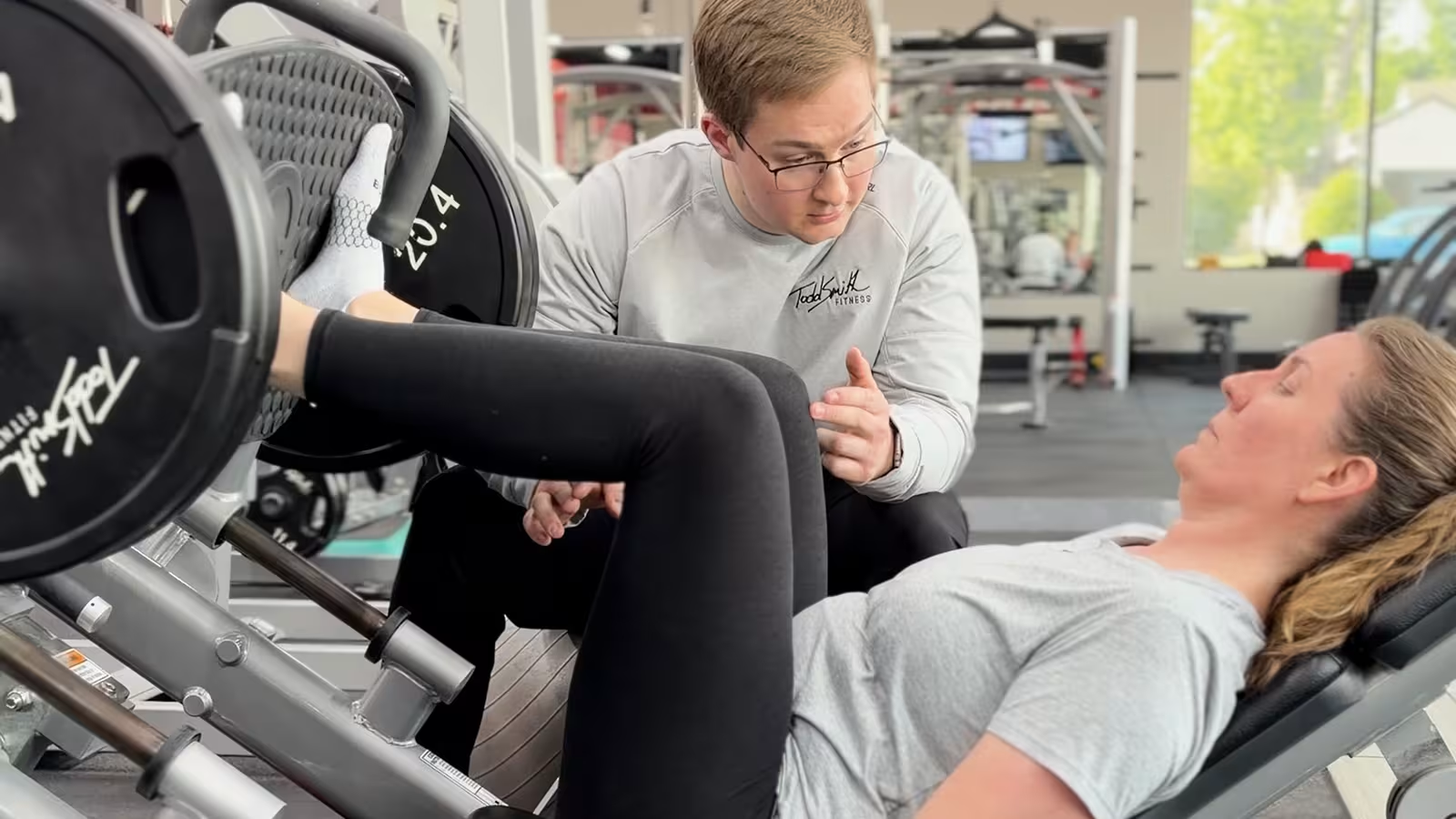
That experience doesn't mean knowing everything. It means recognizing what deserves attention sooner, asking better questions faster, and finding practical solutions when the obvious approach doesn't fit. It means understanding that every rep needs to be watched — not to micromanage, but because a deviation in form that feels normal to the person doing it can tell a coach more about where the program needs to adjust than any intake form.
Methods are tools. The skill is knowing which tool fits the person standing in front of you.
There Are No Answers — Only Trade-Offs
This is where most fitness plans break down: not at the program design level, but at the decision level.
A personalized fitness plan isn't just a customized schedule. It's a plan built around what you're actually willing to give up to achieve what you want.
Do you want to get leaner? What level of hunger, planning, and dietary restriction are you willing to accept? Do you want to gain more muscle? Are you willing to train harder, eat more, and possibly give up staying as lean as you are now? Do you want to train five days a week? What does that cost in time, recovery, and attention to the rest of your life?
Wanting a result is one part of the decision. What you're willing to trade for it is the other part — and for adults in their 40s and 50s with demanding schedules and bodies that need to function outside the gym, that trade-off calculation is different than it was at 28.
Once the trade-offs are honest, the plan becomes clearer. Three hours a week of supervised, precisely executed training outperforms five unsupervised hours most of the time — not because more is bad, but because for adults with full lives, the math on what they can actually absorb and recover from changes. Recognizing that isn't a concession. It's the actual plan.
A Plan That Fits Who You Are
The best personalized fitness plan is not the one that looks most impressive on paper. It is the one that respects where you've been, works with who you are, and moves you toward what actually matters to you now.
Your history is not baggage. It is information — it tells a coach where you're strong, where you're vulnerable, how you respond, and what will keep you engaged long enough for meaningful change to happen.
Before asking "what program should I follow?" start with a better question: "Why does this matter to me, and what am I actually willing to do to get there?"
The program comes after that conversation. Not before it.
If you're in Omaha and want to start with that conversation — your history, your body, your actual situation — talk to a coach. The discovery call is free, and it starts with what's true for you, not with a template.