There's no shortage of workout programs. You can download one for free, buy one for $29, or generate one with an app in 30 seconds.
So if programs are everywhere, why don't people get the results they came for?
The answer isn't that they picked the wrong program. The answer is that having a program isn't the same as being coached — and most people, when they ask whether personal training is worth it, are evaluating the wrong thing.
The Program Isn't the Bottleneck
A program is a plan. It tells you which exercises, how many sets, how many reps, at what weight. That information is valuable. And in isolation, it is useless.
Every program produces results only when the person following it executes it with precision — the right muscle working, the right range of motion, the right load path. That precision is difficult to self-diagnose. Most people don't know what they're getting wrong because the wrong thing feels normal to them. They've been doing it that way for months or years.
This is why two people can follow the same program and get completely different results. The program is identical. The execution — the variable that actually produces results — is not.
What a Coach Actually Does
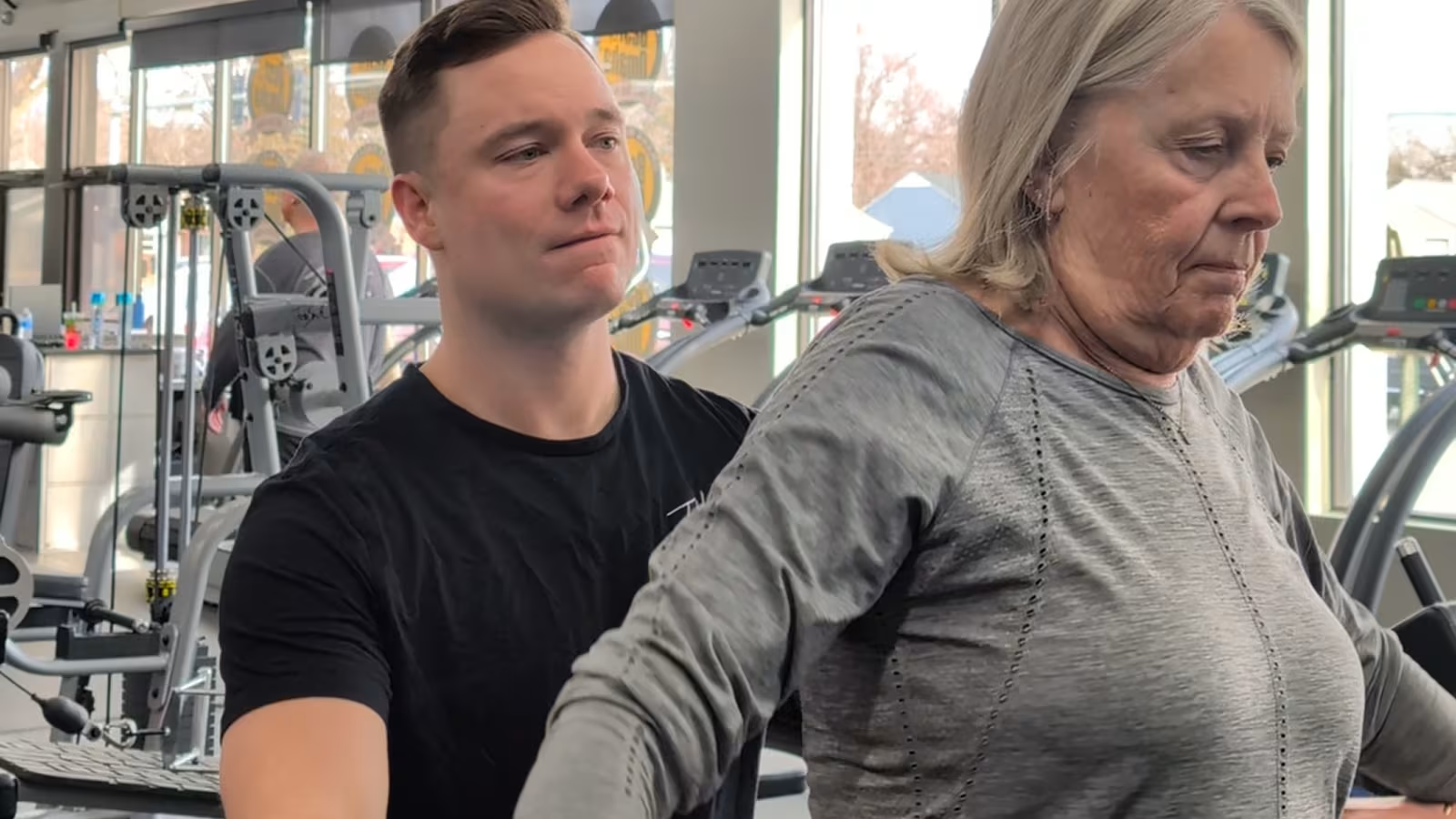
A coach watches. That's the thing fitness culture persistently undervalues — not the program design, not the app features, not the periodization model. The watching.
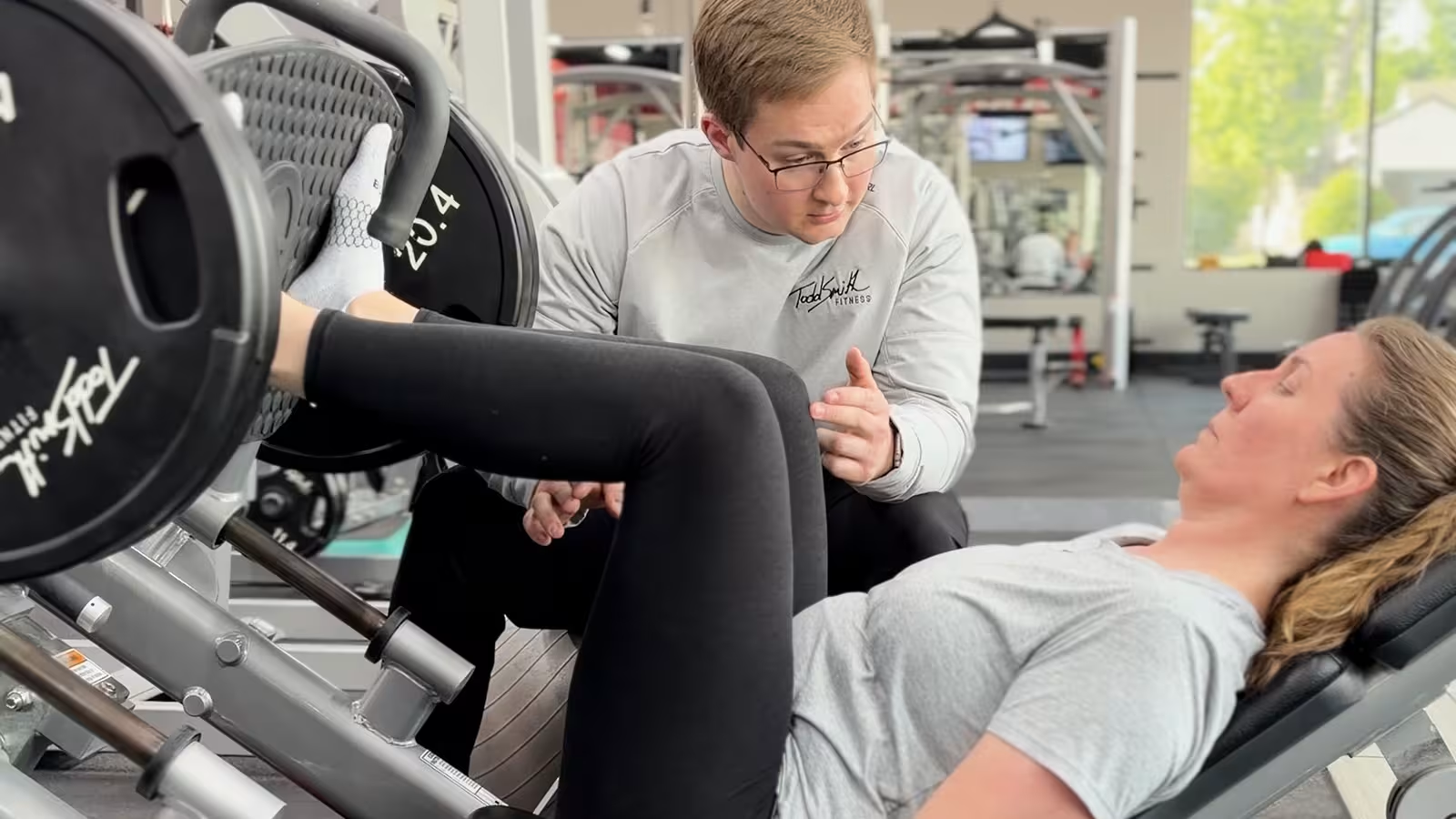
Every rep supervised in real time means a coach can catch the moment a movement breaks down — not six weeks later when the plateau shows up. It means real-time adjustment: the load going up when you're ready, not when the calendar says you are. It means training the target muscle, not compensating around it.
That kind of attention is also what makes progression appropriate. On isolation movements targeting smaller muscle groups, load increases are proportionally enormous. Going from a 30-pound to a 35-pound dumbbell is a 16% jump. Most bodies can't absorb that cleanly — technique degrades, momentum takes over, and the muscle you were targeting gets less stimulus than before. A coach sees it happening. A program doesn't.
The Difference Between Supervised and Coached
Not all personal training is the same thing.
Being supervised means a trainer is in the room while you work out. Being coached means a trainer is actively watching your mechanics, correcting what breaks down, adjusting the load based on what they observe, and building a picture of your specific body across sessions.
The first can happen with a trainer managing eight people at once. The second requires actual attention — a ratio that makes watching possible. Micro-group training at TSF caps at four people specifically because the coaching ratio matters. A session where someone watches and corrects every rep is categorically different from a session where someone is available if you have a question.
The methodology at TSF is built on this distinction — not supervision as a feature, but coaching as the actual product.
Why This Matters More After 40
For adults past 40, the execution gap is more expensive. The body has less tolerance for load placed on the wrong structures. Connective tissue recovers more slowly. An imprecision that a 26-year-old trains through without consequence is, for a 52-year-old with a shoulder that has some history, a problem that compounds over months.
The goal — building muscle and maintaining it over time — depends on training being sustainable. That sustainability comes from precision: movements that load what they're supposed to load, progressions the body can actually absorb, and someone in the room who can tell the difference between a good training day and a session that's setting something up to hurt.
Three hours a week of well-coached, precisely executed training will outperform six hours a week of unsupervised volume every time. Because volume without quality execution isn't building the foundation — it's building patterns that work against it.
So Is Personal Training Worth It?
Yes — if what you're getting is actual coaching.
If the trainer in the room is watching every rep, correcting what breaks down, managing the load based on what they observe, and building a picture of your specific body over time — that's worth it. That's the mechanism that produces results a program alone can't.
If the trainer is present but not watching — if the ratio is too high for real attention, if the same program runs for everyone, if corrections only come when you ask — then you're paying for supervised exercise. That's a different product.
The question worth asking isn't "is personal training worth it." It's "am I actually being coached?"
If you want to understand what coaching looks like session to session at TSF — and whether it's the right fit for where you are — talk to a coach. The discovery call is free, and it starts with your history, your body, and what you're actually working toward.