The honest answer is: it depends on what you're actually buying.
Personal training costs vary widely — from $30 a session at a big-box gym to $150 or more for premium one-on-one work in a private studio. Most people searching this question are trying to figure out whether it's worth it, and what the difference is between the lower end and the higher end. That's the right question. The number on its own doesn't tell you anything useful.
What determines the cost of personal training isn't square footage or equipment. It's coach attention — specifically, how much of it you actually get in a session.
The Big-Box Model (And Why It's Cheap)
At most commercial gyms, personal training is sold as add-on packages bolted onto a membership. The pricing is accessible because the model is designed for scale: trainers carry large client rosters, sessions run back-to-back, and the format is one-on-one in name but often interrupted in practice. A trainer managing 40-plus clients a week has limited bandwidth to track your history, notice your form deteriorating in the third set, or calibrate next week's session to what happened this week.
The lower price reflects what the model can and can't do. It's not a criticism — it's a structural reality. Supervision at scale isn't supervision. It's presence.
The Premium One-on-One Model (And What You're Paying For)
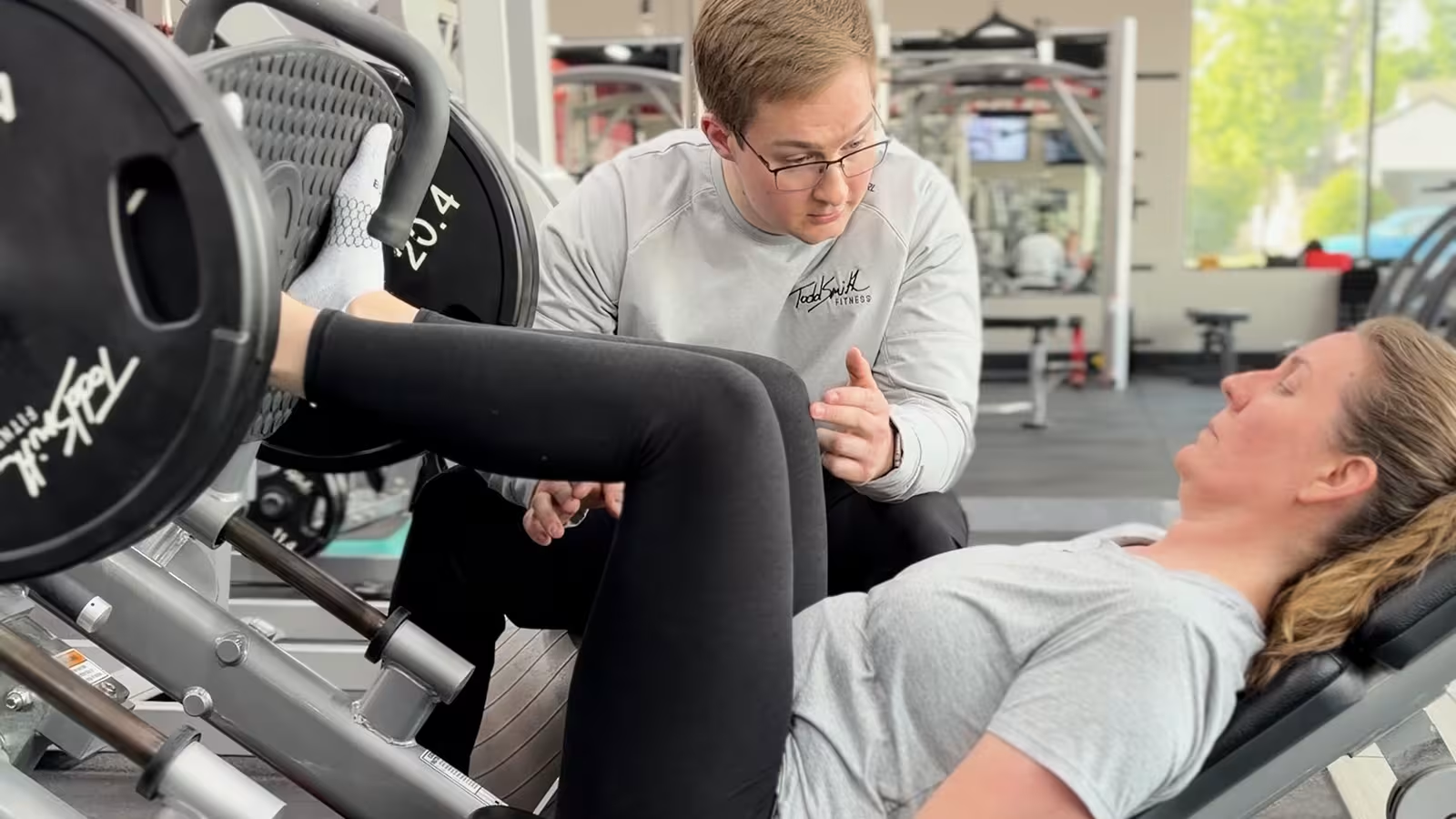
At the other end, premium one-on-one personal training buys undivided attention — one coach, one client, every rep watched. The price is higher because the format is genuinely more demanding of the trainer's time and energy. Done well, it's the most individualized training available.
The question worth asking: do you need that level of individualization, or do you need a high enough coach-to-client ratio that your training is still genuinely supervised? Those aren't the same thing, and for most adults, the answer is the latter.
The Micro-Group Format — A Third Category
Micro-group training at TSF sits between those two models — but it isn't a compromise. It's a different design entirely.
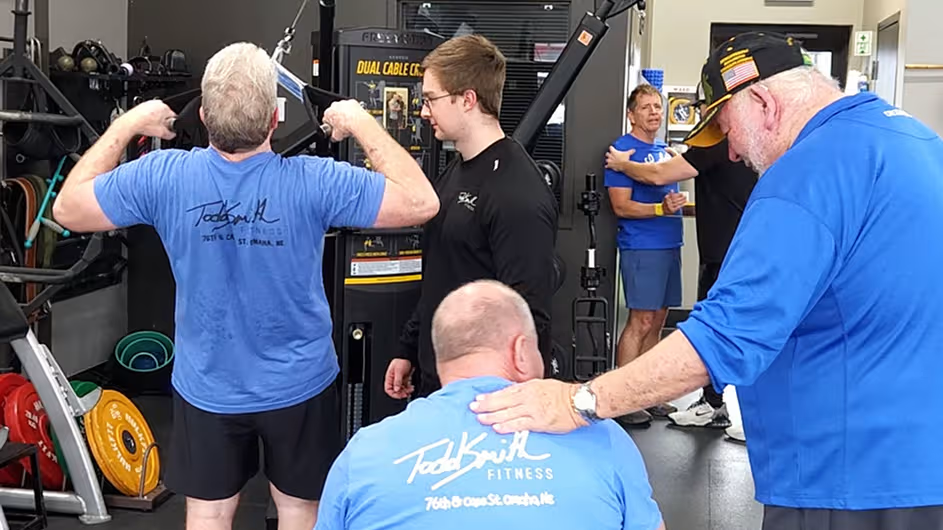
We cap every session at four people. One coach. Maximum four members. That ratio exists because it's the highest number that still allows genuine supervision — where a coach can watch every rep, catch a form deviation in real time, and individualize the work within a shared session. Above four, the math changes. The coach becomes a traffic manager rather than an observer. Below four — often three, sometimes two — every person in the room gets the attention that produces real adaptation.
Three adults in the same session might be working different exercises, different loads, different ranges of motion. The format is shared. The programming is individual.
This is not a smaller group fitness class. It's what makes three hours a week actually work — because the quality of those hours is high enough that you don't need more of them.
What You're Actually Paying For at TSF
When people ask about the cost of training at TSF, what they're really asking is: what do I get for this?
The answer is 42 years of a methodology built for adults with real bodies and real schedules. A coach-to-member ratio that keeps supervision genuine. Exercise selection that passes a risk-vs-benefit test for your specific body — not averaged across a class. Programming that accounts for what you're bringing into the room that day: the shoulder that's been watched for two years, the sleep you didn't get, the week you had. And a business that runs entirely on referrals, because the people already in the room stay for decades.
What that looks like for adults over 40 — bodies with longer recovery windows, more joint history, and more at stake — is specifically what TSF was built around. Not as a specialty. As the core population.
We don't post pricing publicly, because pricing without context is the wrong starting point. The right starting point is whether the format is right for your situation — your history, your body, what you're actually working toward. That conversation happens on a discovery call.
The Question Worth Asking
Before you compare prices, compare what each format actually delivers.
A $45 session where you're one of thirty clients that week and your trainer is reading your program off a clipboard isn't the same value equation as a session where someone who knows your body is watching every rep. The number matters less than the supervision model behind it.
Is personal training worth it? That piece goes deeper into the coaching vs. program distinction — and why having a program isn't the same as being coached.
If you're in Omaha and want to understand what TSF looks like for your specific situation, talk to a coach. The discovery call is free. It starts with where you are — not with a sales pitch.