Many people approach strength training with one goal: hit the numbers. More reps, more sets, more weight. But while numbers are easy to track, they don’t tell the whole story — and they don’t guarantee progress.
To build real strength, stability, and muscle, you need more than a workout log. You need awareness. This long-form guide explains why internal focus beats external metrics, how to build it, and what changes when you do.
Why Most People Train From the Outside In
Most lifters start by focusing on external markers:
- how heavy the weight is
- how many reps they complete
- how many sets they “should” do
- what their program tells them
These metrics feel objective and measurable, which makes them reassuring. But here’s the truth:
Muscles don’t respond to numbers — they respond to tension.
You can complete a workout exactly as written and still fail to challenge the muscles you’re trying to target. Your body doesn’t care about rep counts; it cares about internal effort, control, and consistent tension.
Movement is not the same as stimulus.
If you’re simply moving weight from point A to point B, you’re training the movement, not the muscle. True stimulus comes from how deeply the muscle is challenged within each rep — how well it stretches, contracts, and maintains tension.
The Problem With Chasing Numbers Alone
Chasing numbers can cause:
- poor form as fatigue increases
- tension shifting into the wrong muscles
- joints taking on more load than they should
- plateaus in strength and muscle growth
- frustration when “doing more” doesn’t equal better results
Most people think they need a new program. What they actually need is new awareness.
How to Shift to Internal Muscle Awareness
Internal focus isn’t about slowing down or using ultra-light weights. It’s about being deliberate and building a deeper connection with how your body works.
1. Turn Down the External Noise
The gym is full of distractions:
- workout influencers
- casual advice
- comparison to others
- the pressure to progress every week
To build awareness, you need to reduce noise and increase attention.
2. Ask These Check-In Questions Every Rep
These three questions instantly improve your form and focus:
a. Can I feel the target muscle lengthen and shorten?
If you don’t feel a full stretch or a deliberate contraction, you’re missing the muscle’s active range.
b. Am I controlling the weight, or just enduring it?
Surviving the set isn’t the same as stimulating growth.
c. Is the tension staying in the right muscle, or leaking into others?
Your body loves shortcuts. Internal focus keeps the work where it belongs.
3. Use Tempo to Build Awareness
Slowing certain phases of the lift helps you feel:
- where you’re strongest
- where you lose control
- where compensation begins
This doesn’t mean slow-motion training, just controlled motion with intent.
4. Understand That “Feeling” Comes Before “Progressing”
When you can reliably feel the muscle working, progression becomes:
- safer
- smoother
- more predictable
- less dependent on mood or energy
Awareness builds consistency, and consistency builds strength.
Why Working With a Coach Accelerates This Learning
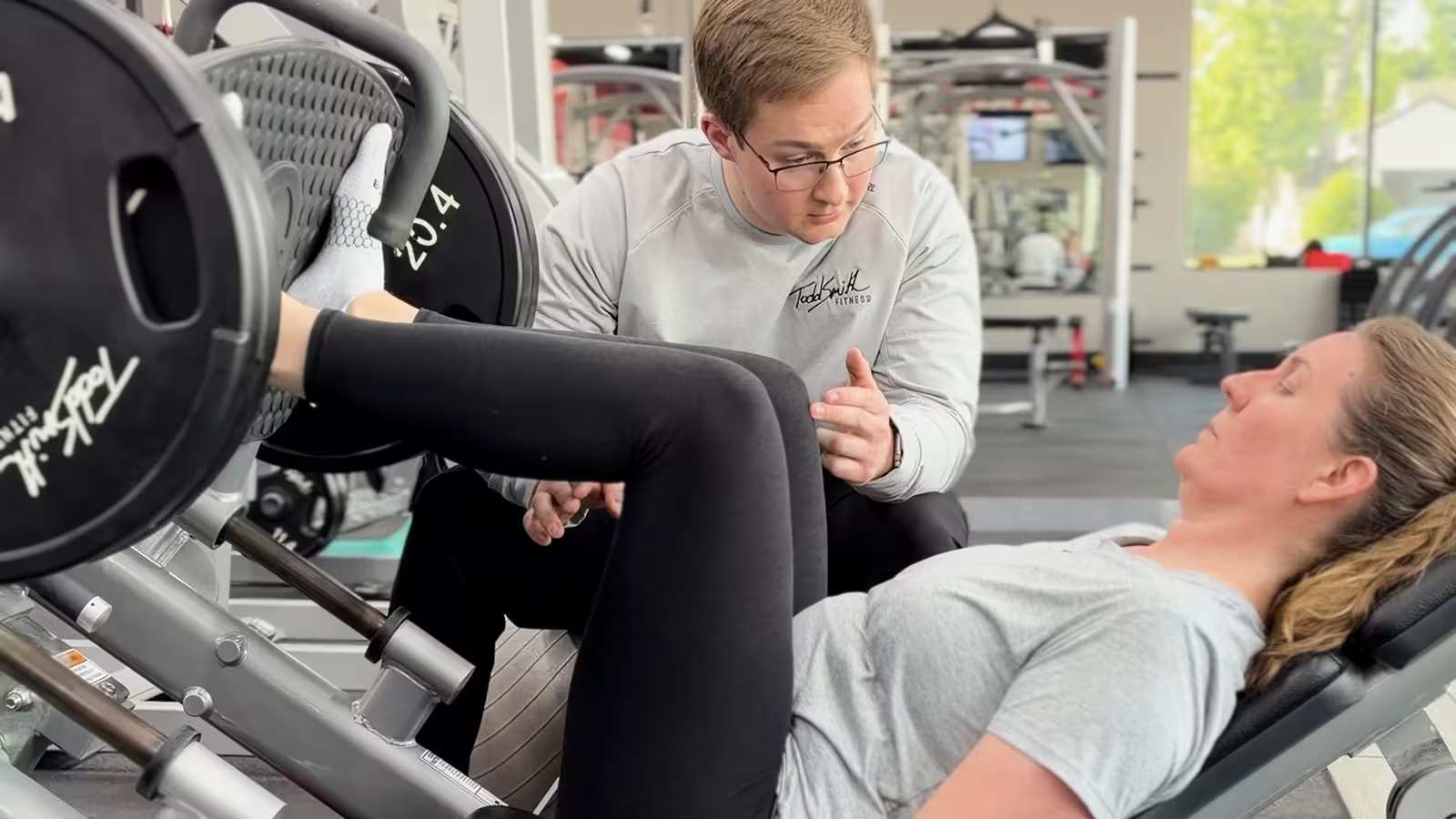
A skilled strength coach can reduce years of trial and error into weeks.
Here’s what a coach helps you discover:
- the best joint angles for your structure
- where to position your body on machines
- how to line up resistance with the right muscle
- how to “lock in” tension and stop compensation
- what meaningful muscle stimulus should feel like
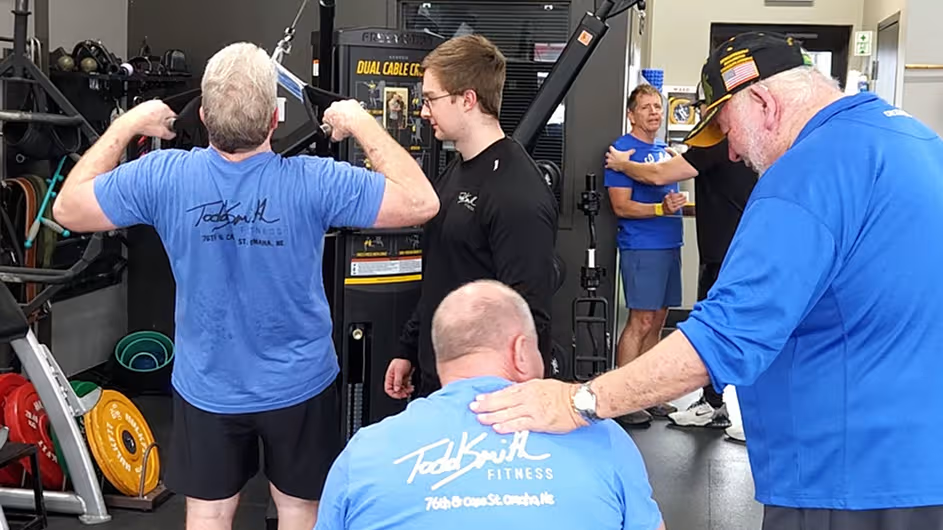
A coach isn’t just correcting form, they’re teaching feel. And once you learn it, you can apply it to every exercise you ever do.
You’re Not Just Training Muscles — You’re Training Attention
This is the deeper truth:
Strength training is neurological before it’s physical.
Your brain decides which muscles fire.
Your attention decides where the tension goes.
Your execution decides your results.
Two people can perform the same exercise with the same weight and get wildly different results based on attention alone.
Internal focus trains the mind-muscle connection.
This improves:
- muscle activation
- stability
- joint positioning
- force output
- total training effect
When you train your attention, your muscles follow.
Do Numbers Still Matter? Yes — Just Not First
Sets, reps, and weights are still important. They help:
- track progress
- organize training
- measure consistency
- set goals
But they’re the container.
The quality inside the container — tension, control, intent — is what actually drives progress.
The Benefits of Training From the Inside Out
Once you adopt internal awareness, you’ll notice changes fast.
1. Smoother, More Predictable Progress
Because you’re consistently providing high-quality stimulus.
2. Better Joint Health
Less cheating + better alignment = happier joints.
3. More Muscle From Fewer Reps
A focused set of 8 often outperforms a distracted set of 20.
4. Strength Where You Actually Need It
Not just in the big show muscles, but in the stabilizers that support performance and longevity.
5. Training Feels More Engaging
You stop checking out mentally.
You start experiencing the rep with your whole body.
6. You Build Mastery, Not Just Movement
Your workouts become skill-based rather than chore-based.
How to Apply Internal Focus to Any Exercise
Here’s a simple formula:
Step 1: Set up the exercise with intention
Know exactly what muscle you're targeting.
Step 2: Slow the first few reps
Feel the muscle stretch → feel it contract → lock in the pattern.
Step 3: Maintain tension, not speed
Smooth reps beat fast reps every time.
Step 4: Adjust if the wrong muscles take over
Shift joint angles
Change foot or hand position
Reduce load if needed
Step 5: Finish the set with control, not desperation
The last few reps should be challenging, but not chaotic.
Conclusion: The Future of Your Training Starts Inside
Training from the inside out is a skill — one that improves every aspect of your fitness:
- your strength
- your muscle growth
- your mobility
- your stability
- your longevity
When you stop relying on numbers alone and start listening to your body, something powerful happens:
You don’t just execute exercises.
You master them.
You don’t just move weight.
You train muscles.
And that’s when progress becomes inevitable.