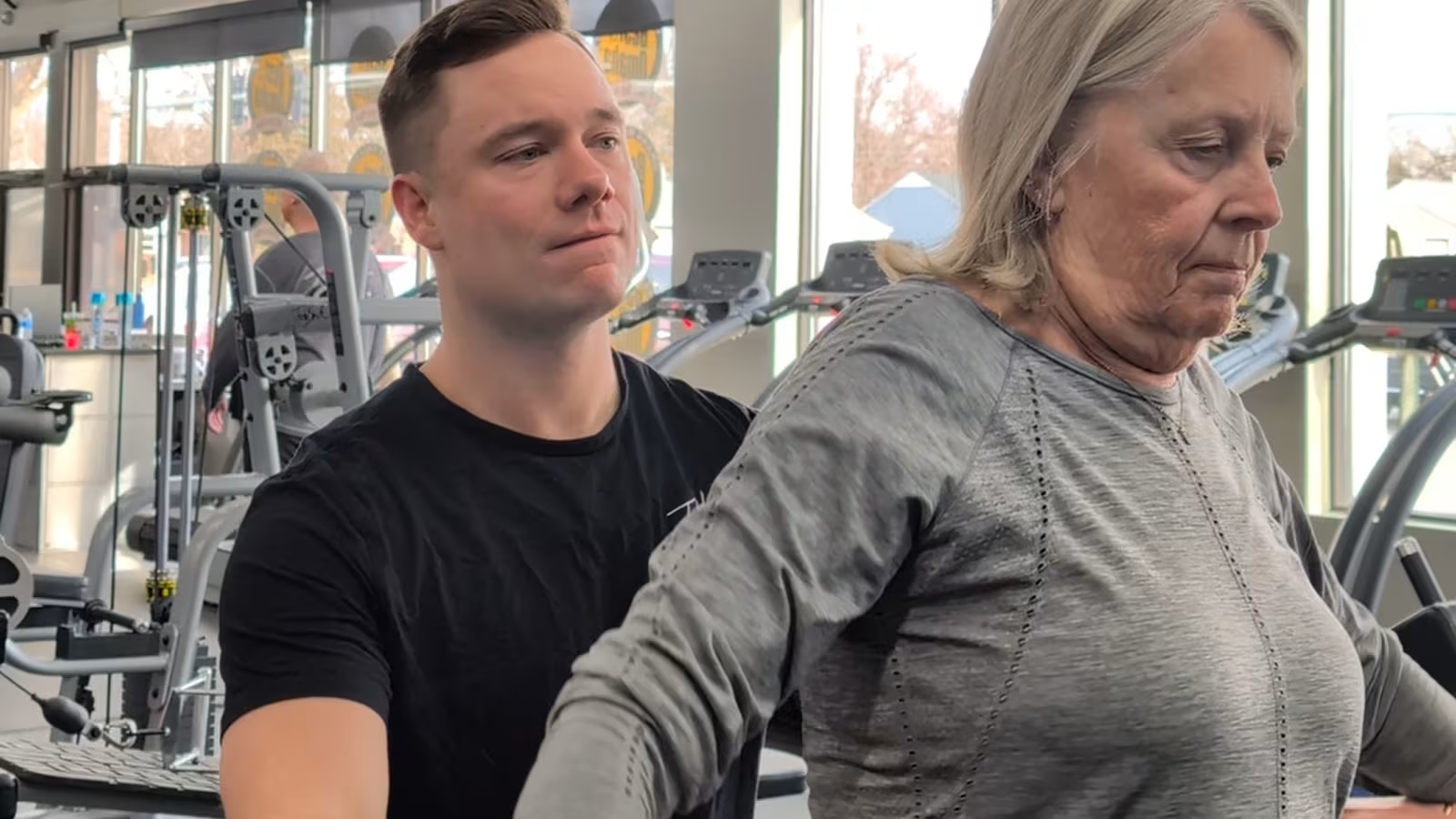
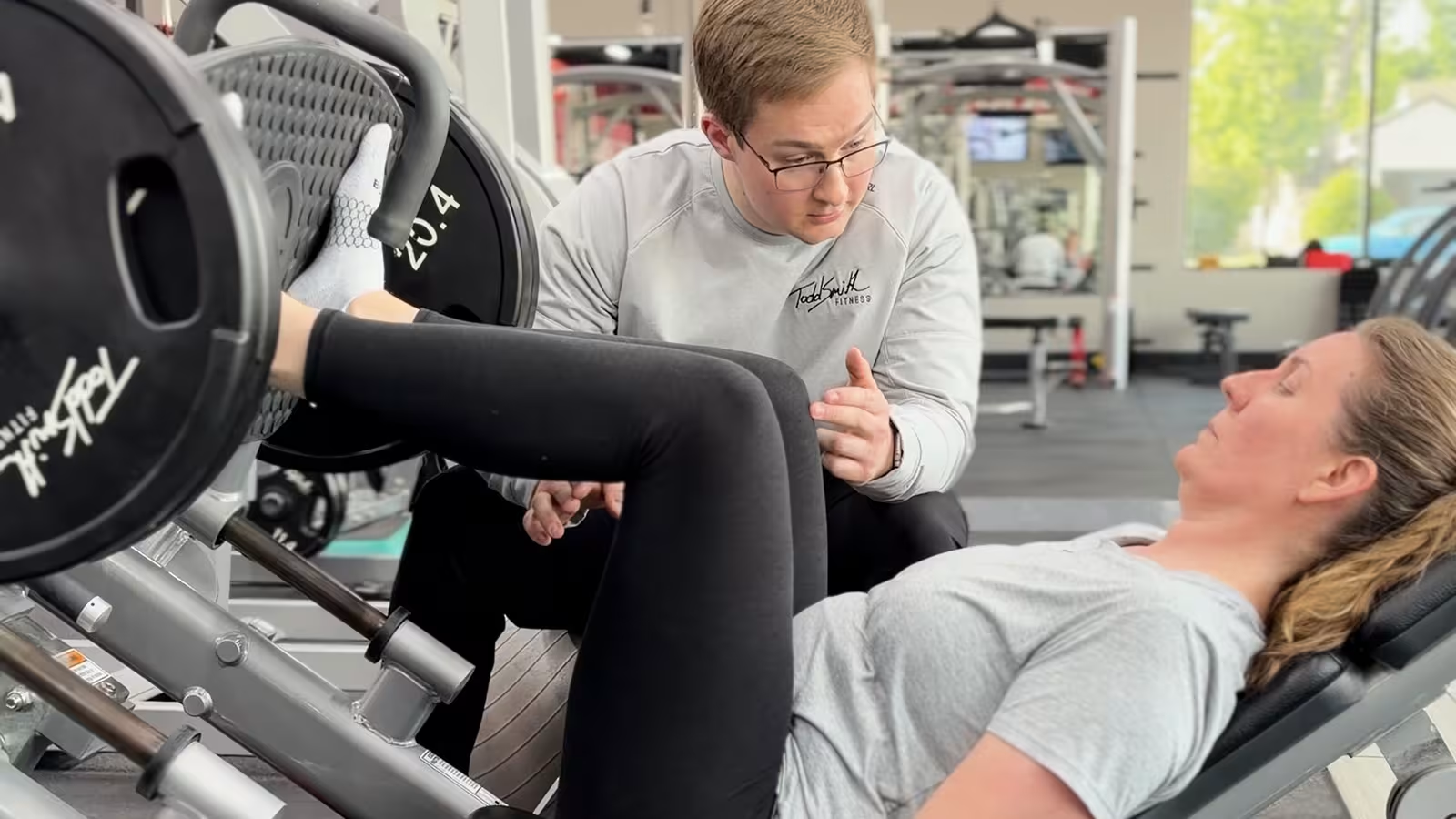
There's a pattern that plays out over and over again. We've watched it across forty years of coaching personal training in Omaha, across thousands of clients, every demographic, every body type:
People lose weight. And then they gain it all back. Not because they're lazy. Not because they lack discipline. Not because they failed in some moral sense. They gained it back because of how they approached losing it in the first place.
If you've been on this cycle for a while — lost 20 pounds, gained 25 back, repeat — what we're about to share isn't an indictment of you. It's the explanation no one else will give you, and the fix that actually works.
What you're actually losing when "the scale goes down"
When you focus on weight loss, you measure success with one number: the scale.
The scale goes down. It feels like progress. So you keep doing whatever's driving the number down — usually some combination of eating less, adding more cardio, and trying harder.
But here's what the scale doesn't tell you.
Your body doesn't only lose fat. It loses muscle. It loses water. It loses glycogen (the carbohydrate energy stored in your muscles). And when muscle is the thing that falls off, your metabolism slows. The body becomes more efficient — it now burns fewer calories at rest than it did before.
Now you have a problem.
You've built a body that requires less food to maintain — but you still live in the same environment, with the same restaurants, the same family events, the same kitchen, the same stress.
The metabolic trap
Here's the trap most people don't see coming.
Extreme dieting and unsustainable routines push your body into what's effectively conservation mode. Hunger increases. Energy drops. Sleep quality often gets worse. Training quality suffers — you can't push as hard because you don't have the fuel.
Eventually, life catches up.
A long week of work. A family vacation. A holiday. Real life happens. Old habits return.
Except now your body burns fewer calories than it did before the diet. So the same eating patterns you maintained your weight on six months ago — now they make you gain.
And gain. And gain.
This is the inevitable road back to fat.
It's not a failure of willpower. It's the predictable outcome of an approach that was always going to fail.
Why it keeps happening (the five mistakes)
The pattern repeats because the same mistakes get made every time. After forty years, we can almost set our watch by them:
- Prioritizing the scale over body composition. What's on the scale isn't what matters. What's in the mirror — and what's in your hormones, your strength, your metabolism — is.
- Losing muscle along with fat. When you cut calories aggressively and don't strength train, you lose muscle by default. Your body burns it for fuel. And then your metabolism slows to match.
- Relying on short-term, restrictive methods. Six-week challenges. 30-day detoxes. Whatever you can endure for a month, you'll un-do over the following year.
- Ignoring strength training and recovery. Muscle is what protects your metabolism. Strength training is what protects your muscle. Skip it, and you're losing the foundation your long-term results sit on.
- Trying to "out-diet" poor food quality. No amount of careful calorie counting compensates for a diet built on hyper-processed foods. The food itself is fighting your hunger signals.
If you've made any combination of these mistakes — and almost everyone has — you've experienced the rebound. It wasn't you. It was the strategy.
The real difference: fat loss vs weight loss
The fix starts with a different goal.
Weight loss is what the scale measures. It includes fat, muscle, water, glycogen — anything that makes the number go down.
Fat loss is specifically reducing body fat while keeping (or building) muscle. The number on the scale may drop slowly, may stay flat, or may even go up if you build enough muscle. But what's happening underneath — the actual transformation in how you look, move, and feel — is dramatically different.
For more on why this distinction is the foundation of everything we coach, read our muscle-first philosophy article.
The short version: forget the scale. Build muscle first. The fat takes care of itself when the muscle stays.
How to actually lose fat (without rebuilding the trap)
Sustainable fat loss doesn't start with math. It starts with better inputs.
Choose foods closer to their original form. Meat. Eggs. Fruits. Vegetables. Potatoes. Rice. The foods your great-grandparents would recognize as food. These are harder to overeat. They satisfy hunger longer. They support stable energy and steady fat loss.
Reduce highly processed, hyper-palatable foods. The ones engineered to be effortless to overeat. They blunt your hunger signals, spike your blood sugar, and crash your energy. They're not evil — they're just not the foundation of how you eat if you want lasting results.
Let food quality regulate your intake. Instead of obsessing about calories and macros, let real food do the work. When most of what you eat is unprocessed and protein-anchored, your hunger naturally regulates. You eat enough. You don't overeat. You don't need to count.
Train to keep muscle. Two or three focused strength training sessions a week, with full effort on every rep, protect the muscle that protects your metabolism. This is non-negotiable.
Build habits you can repeat on your busiest, most stressful weeks. If your strategy only works when life is calm and your kitchen is perfectly stocked, it won't survive the first business trip or sick week. Build a foundation that works on the bad weeks — the good weeks will take care of themselves.
The real goal
The goal isn't to lose weight.
The goal is to build a body that regulates itself better — stable energy, controlled hunger, strength that sticks, recovery that compounds.
A body that doesn't need to be policed. A body where the right choices are also the easy ones, because the system underneath is healthy.
Because if your results only exist when everything is perfect — when work isn't stressful, when the kids aren't sick, when you're not traveling — they were never your results.
They were a temporary borrow.
The real ones — the ones that last decades — come from a fundamentally different approach. The one we've been teaching at Todd Smith Fitness for forty years.
How we coach this at Todd Smith Fitness
For every client who walks through our doors looking to lose weight, the first thing we do is reframe the goal.
We don't focus on the scale. We focus on building muscle, protecting the body's metabolic engine, and developing a relationship with food that works whether life is going perfectly or falling apart.
Our clients — busy professionals, parents, people in their 50s and 60s who've been on the rebound for decades — typically see two things in their first 90 days:
- The scale barely moves
- They look and feel dramatically different
Then over months and years, the body composition shift accelerates while the maintenance gets easier. That's not magic. It's the predictable result of finally targeting fat loss instead of weight loss.
If you've been on the rebound cycle and you're tired of it, that's a starting point. We can show you what training and eating for fat loss — specifically, not just weight loss — actually looks like.
Ready to stop the cycle? Train with us at Todd Smith Fitness in Omaha